
HomeLearnIs crypto legal in the UAE?
Is crypto legal in the UAE?
 26 November 2026 · Amjad Hussain, ICWIM · Dubai, UAE
You can buy, hold and sell cryptocurrency in the UAE, but providers must be licensed, the rules depend on where the firm is based, and stablecoins have their own rules. Here is the picture in plain English, plus the safety checks that matter more than the legal question.
What the law says, simply
The UAE did not ban cryptocurrency. It chose to regulate it. Since a federal cabinet resolution in 2022, firms that carry on virtual-asset activities, such as running an exchange, offering custody or arranging trades, may not do so onshore without approval from the federal regulator or a local licensing authority. In practice, that means an ordinary person using a licensed exchange is on the right side of the rules, while an unlicensed platform or a private person selling crypto services to the public is not.
Which regulator applies depends on where the firm operates, just as in the rest of UAE finance:
| Where | Who licenses virtual-asset firms |
|---|---|
| Dubai (mainland and free zones, except the DIFC) | Virtual Assets Regulatory Authority (VARA) |
| Dubai International Financial Centre | Dubai Financial Services Authority (DFSA) |
| Abu Dhabi Global Market | Financial Services Regulatory Authority (FSRA) |
| Other emirates, onshore | UAE Capital Market Authority (CMA), formerly the Securities and Commodities Authority |
| Stablecoins used for payments | Central Bank of the UAE (payment token rules) |
The system is still developing. Rules have been updated more than once, and the Capital Market Authority took over from the SCA on 1 January 2026. Always check the regulator’s current website rather than an old article, including this one.
Using a licensed platform
A licence matters because it means a regulator supervises the firm’s controls, custody of client assets, marketing and complaints handling. Before you use an exchange or broker:
- Find the legal entity that will hold your account, in the terms and conditions.
- Check the regulator’s public register for that entity. VARA, the DFSA, the FSRA and the Capital Market Authority each publish who they have licensed and for which activity.
- Read what the licence allows. A firm can be licensed for some activities (for example advisory) and not others (for example custody or exchange).
- Check where your assets are held and what happens to them if the firm fails. Ask whether client assets are segregated.
- Read the fee page before you deposit: trading fees, spreads, withdrawal and network fees.
The same habit applies to any investment firm. Our guide on checking if a broker is legal walks through it.
Stablecoins are a special case
Stablecoins aim to hold a steady value, usually against a currency such as the US dollar. The Central Bank of the UAE introduced a payment token services regulation in 2024. In simple terms: firms that issue, convert or hold payment tokens for people in the UAE need Central Bank licensing or registration, businesses face limits on accepting foreign-currency payment tokens as a means of payment, and certain types, such as algorithmic stablecoins and privacy tokens, are prohibited from being issued or promoted. Holding a stablecoin as an investment on a licensed exchange is a different thing from using it to pay for goods in the UAE.
Whatever the rules, a stablecoin is only as stable as the reserves and the company behind it. “Stable” is a design goal, not a guarantee.
The risks that matter more than the law
- Volatility. Crypto prices can fall sharply in days. Only invest an amount you could see fall a long way without changing your life.
- Scams. Fake exchanges, “guaranteed return” schemes, romance and “mentor” scams, cloned apps and fake customer-support accounts are common. A legal market still has criminals in it.
- Custody and loss. If you hold your own keys and lose your recovery phrase, nobody can restore your coins. If you leave coins on a platform, you rely on that platform.
- Leverage and derivatives. Margin and futures can lose more than you expect, and quickly. They are not a beginner product.
- Complexity and hype. Thousands of tokens exist. Many have no clear use and no future. Popularity on social media is not research.
A short safety checklist
- Type the platform’s address yourself; never follow a link from a message.
- Turn on two-factor authentication with an app, not only SMS.
- Never share your recovery phrase with anyone, including “support”.
- Send a small test amount first when moving funds to a new address.
- Walk away from anyone promising a fixed return, or asking you to move to a private chat.
Where crypto fits next to other investments
A useful way to think about crypto is by its role. Shares represent ownership of businesses that earn profits. Bonds and sukuk are loans or asset-backed claims that pay income and return capital at maturity. Gold is a store of value that pays no income. Cryptocurrencies are digital assets whose value depends mainly on what other people are willing to pay, and in some cases on how a network is used. They produce no cash flow of their own, so their price swings are driven largely by sentiment, adoption and regulation news.
That does not make crypto “bad”. It means it belongs after the foundations: an emergency fund, no expensive debt, and a regular plan into diversified, lower-risk investments. Many careful investors cap crypto at a small share of their total portfolio, an amount they could lose in full without damaging their goals. Write that cap down before you buy anything, and review it once a year, not every time the price moves.
Tax and records
The UAE does not levy personal income tax on salary, and the tax treatment of crypto in your home country may differ a lot. Several countries tax gains made by their residents, including those living in the UAE. Keep records of every buy, sell and transfer, with dates and amounts, and ask a qualified tax adviser about your own situation.
How to learn crypto without the hype
A sensible beginner path is to understand what you are buying before you buy it: how blockchains work, what gives a token value or removes it, how exchanges and wallets differ, and how position size limits your damage. Start with a plan, a maximum amount, and a rule that crypto stays a small part of your total investments.
In Amjad’s Crypto Mentor programme, you learn this one to one: how crypto markets work, wallets and custody, scam awareness, risk sizing and a practice portfolio. It is education only. There are no tips and no promised returns. For a broader picture of crypto next to stocks, bonds and gold, see crypto in the Where Can I Invest? series. Not sure where to begin? Book a free 15-minute intro call.
Tools that make this easier
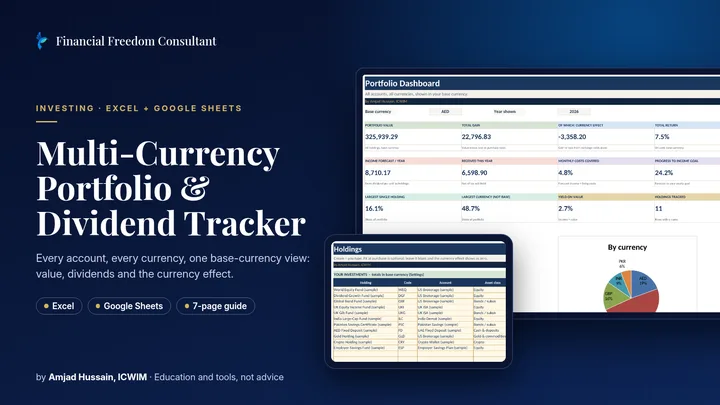 Multi-Currency Portfolio & Dividend Tracker$19, instant downloadView →
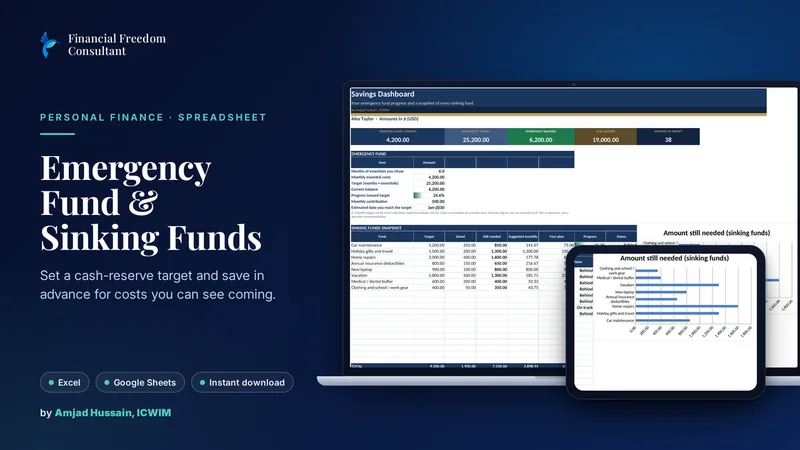 Emergency Fund Planner$6.99, instant downloadView →
 Free 30-Minute Money ResetFree, instant downloadView →
Frequently asked questions
Is cryptocurrency legal in the UAE?
Yes. The UAE regulates virtual assets and the firms that deal in them. Using a licensed provider is legal. Offering crypto services without the right licence is not.
Who regulates crypto in the UAE?
It depends on location: VARA in Dubai (except the DIFC), the DFSA in the DIFC, the FSRA in ADGM, and the Capital Market Authority (formerly SCA) elsewhere onshore. The Central Bank covers payment tokens such as stablecoins.
Is VARA the only crypto regulator in the UAE?
No. VARA covers Dubai outside the DIFC. Other regulators cover other areas, and the Central Bank has its own payment token rules.
Are stablecoins legal in the UAE?
Stablecoin services for people in the UAE need Central Bank licensing or registration under its payment token rules, and some types, such as algorithmic stablecoins, are prohibited from being issued or promoted.
How do I check if a crypto exchange is licensed?
Find the legal company in its terms, then search the relevant regulator's public register (VARA, DFSA, FSRA or CMA) and read the activities the licence covers.
Do I pay tax on crypto gains in the UAE?
The UAE has no personal income tax on salary, but your home country may tax your gains and corporate tax can apply to business activity. Keep records and ask a qualified tax adviser.
Is crypto a safe investment in the UAE?
Regulation does not remove price risk or scams. Crypto is very volatile, so only invest money you can afford to lose and keep it a small part of your plan.
Sources
- Virtual Assets Regulatory Authority (VARA), Dubai
- Central Bank of the UAE: Payment Token Services Regulation
- UAE Capital Market Authority
- ADGM Financial Services Regulatory Authority
- Dubai Financial Services Authority
Want a person to check your numbers?
A free 15-minute intro call to see where you stand and what to do next. Education only, no tips, no pressure.
Short form first, so the call is useful for you.
Education only. Not investment, tax, legal or religious advice, and not a recommendation to buy, sell or hold any product. Rules and fees change; always check official sources. By Amjad Hussain, ICWIM (CISI Level 3 International Certificate in Wealth & Investment Management), accredited by the UAE Capital Market Authority, with 10+ years in financial markets. Dubai, UAE.