
UAE REITs explained: how they work and what to check
 26 November 2026 · Amjad Hussain, ICWIM · Dubai, UAE · Updated 29 November 2026
A REIT lets you own a slice of a portfolio of buildings without buying a whole property, and without a mortgage. But REITs are not “property without risk”. This guide explains how UAE REITs work, which ones are listed, how they pay income, what can go wrong and how to buy them.
What a REIT is
Buying a flat or an office yourself means a large deposit, a mortgage, agent fees, maintenance and a single building in a single place. A REIT pools many investors’ money to buy a portfolio of properties and hires managers to run them. The tenants pay rent to the REIT, the REIT pays its costs, and a large share of the remainder is paid out to unit holders. Because the units are listed, you can usually sell them on any trading day, which is not true of a physical property.
Rules for REITs, including how much income must be distributed and how much debt they may carry, are set by the regulator and the REIT’s own constitution. Always read the fund’s documents rather than relying on a general description.
REITs listed in the UAE
At the time of writing, the UAE has a small number of listed REITs. Emirates REIT and ENBD REIT trade on Nasdaq Dubai, and Dubai Residential REIT and Al Mal Capital REIT trade on the Dubai Financial Market (DFM). The list changes as new REITs are launched or merged, so check the exchanges’ own pages for the current list before you research a specific fund. The small size of the local market is itself a point to understand: with only a few REITs, your choice is limited and each one is concentrated in particular property types and locations.
| What to look at | Why it matters |
|---|---|
| Property type | Residential, office, retail and logistics behave differently when the economy changes. |
| Location and number of assets | Few assets in one area means more concentration risk. |
| Tenants and lease length | Long leases with solid tenants give more predictable rent. |
| Occupancy | Empty space earns nothing but still costs money. |
| Debt (gearing) | Borrowing can boost returns and magnify losses, and rising rates raise costs. |
| Fees | Management and performance fees reduce what reaches you. |
| Trading volume | Low volume can make units harder to sell at a fair price. |
How REITs pay you
REITs usually pay income (a distribution) at regular intervals. The yield is the distribution divided by the unit price. Be careful with headline yields:
- A high yield can be a sign that the price has fallen because the market expects the income to be cut.
- Distributions are not guaranteed. They depend on rent, occupancy and costs, and the REIT can reduce or suspend them.
- The price can fall even while income continues, so your total result is income plus or minus the price change.
- The UAE does not charge personal income tax on this income, but your home country may.
The main risks
- Property cycles. Rents and values rise and fall. Dubai property has seen strong booms and sharp corrections in the past, and past patterns are not a promise.
- Concentration. A small REIT can depend on one market, a few tenants or a few properties.
- Interest-rate risk. Higher rates raise borrowing costs and can make income investments less attractive, which can push prices down.
- Liquidity risk. Thinly traded units can be hard to sell quickly without moving the price.
- Management and fee risk. The quality of the manager matters a lot over time.
- Valuation risk. Property valuations are estimates. The market price can differ from the stated asset value.
REIT vs buying a property yourself
| REIT | Direct property | |
|---|---|---|
| Minimum to start | The price of a unit | A deposit plus fees and costs |
| Diversification | Several properties (but a few, in the UAE) | One property |
| Liquidity | Sold on trading days | Can take months |
| Control | None; manager decides | Full |
| Leverage | Inside the REIT only | Your own mortgage |
| Effort | Low | Tenants, repairs, paperwork |
| Price visibility | Daily market price | Occasional valuation |
Neither is better in general. It depends on your capital, your appetite for effort and risk, and your wider portfolio. If you are comparing, our overview of real estate in Where can I invest? sets out the main routes.
How to buy a UAE REIT
- Get an investor number on the relevant exchange and open an account with a licensed broker. The process is the same as for shares; see how to buy shares on DFM and ADX.
- Read the REIT’s latest annual report, fact sheet and distribution history on its website and the exchange page.
- Decide the maximum amount you will hold in any single property investment.
- Place a limit order if trading volume is low, so you control the price you pay.
- Keep records of distributions and review the fund once or twice a year.
Property funds can also be held through international REIT funds and ETFs, which spread money across many countries. Our guide to index funds and ETFs explains how funds work.
A worked example, with made-up numbers
Suppose a REIT unit costs AED 2.00 and the REIT paid AED 0.14 per unit in distributions over the last year. The yield is 0.14 ÷ 2.00 = 7%. Now suppose the unit price falls to AED 1.70 while the distribution stays the same: the yield looks higher at about 8.2%, yet you have lost AED 0.30 per unit in price (15%). Your total result for the year is the AED 0.14 income minus the AED 0.30 price fall, a loss of AED 0.16 per unit. The numbers are invented to show the arithmetic, not to suggest what any REIT will do. The lesson: look at income and price together, and ask why the price moved.
Where REITs fit in a plan
REITs are an income-oriented part of a portfolio. They suit people who understand that income and prices both move. They do not suit money you may need soon, and they should not be your only investment. Build your emergency fund first, then invest regularly across several types of asset.
Property funds and income investing are covered in Amjad’s one-to-one Complete Investor Programme, which teaches how stocks, bonds, property funds and commodities fit together, with practice portfolios and no tips. You can also read Where can I invest? Real estate, or book a free 15-minute intro call if you want help deciding where property fits.
Tools that make this easier
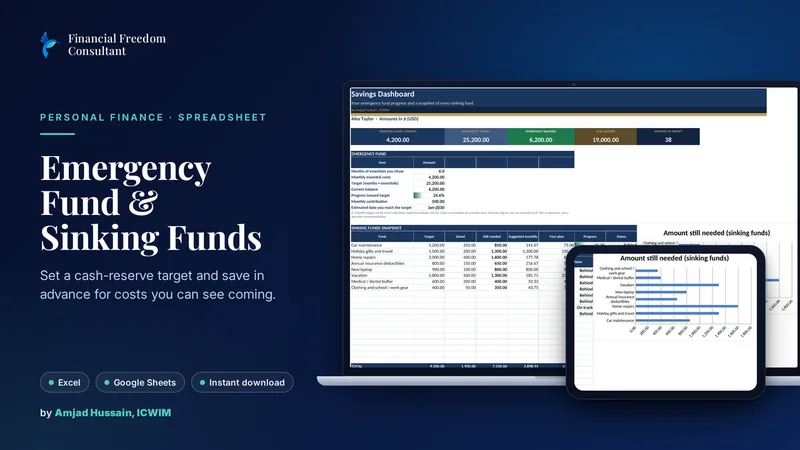 Emergency Fund Planner$6.99, instant downloadView →
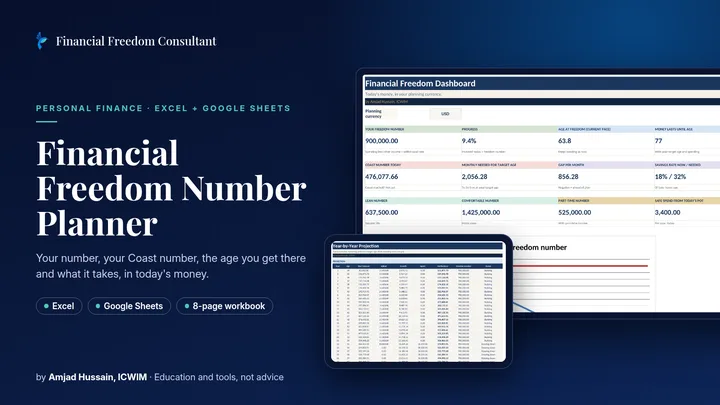 Financial Freedom Number Planner$17, instant downloadView →
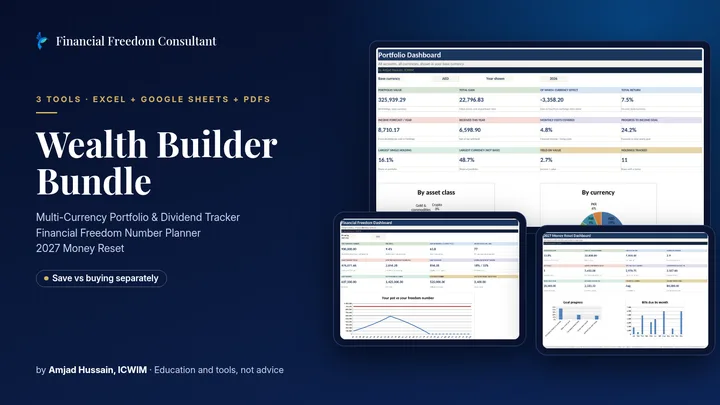 Wealth Builder Bundle: Portfolio Tracker + Freedom Number Planner + 2027 Year-End Money Plan$28.80 until 31 Dec (list $36), instant downloadView →
Frequently asked questions
What is a REIT?
A REIT (real estate investment trust) is a fund that owns income-producing property and lists its units on an exchange. You buy and sell units through a broker, and the REIT distributes much of its rental income to unit holders.
Which REITs are listed in the UAE?
At the time of writing, Emirates REIT and ENBD REIT on Nasdaq Dubai, and Dubai Residential REIT and Al Mal Capital REIT on DFM. Check the exchanges for the current list.
How do UAE REITs pay income?
They normally pay regular distributions from rental income. Distributions are not guaranteed and can be cut if rents, occupancy or costs change.
Are REITs safer than buying property directly?
They have different risks, not necessarily lower ones. You gain easier selling and lower entry cost, but you lose control, and unit prices can fall.
Do I need a broker to buy a REIT?
Yes. You buy listed REIT units through a licensed broker after getting an investor number on the relevant exchange.
Is a high REIT yield a good sign?
Not always. A high yield can mean the unit price has fallen because investors expect income to be cut. Look at the distribution history and the property portfolio.
Do I pay tax on REIT income in the UAE?
The UAE does not charge personal income tax on this income, but your home country may. Ask a qualified tax adviser.
How do I invest in REITs in Dubai?
You buy REIT units the same way as shares. Open an account with a broker licensed to trade on the exchange where the REIT is listed (DFM or Nasdaq Dubai), get an investor number if the broker needs one, then search for the REIT's ticker and place an order. Read the REIT's latest report first to check its debt, occupancy and distribution history.
Sources
- Nasdaq Dubai: real estate investment funds (REITs)
- Dubai Financial Market
- UAE Capital Market Authority
Want a person to check your numbers?
A free 15-minute intro call to see where you stand and what to do next. Education only, no tips, no pressure.
Short form first, so the call is useful for you.
Education only. Not investment, tax, legal or religious advice, and not a recommendation to buy, sell or hold any product. Rules and fees change; always check official sources. By Amjad Hussain, ICWIM (CISI Level 3 International Certificate in Wealth & Investment Management), accredited by the UAE Capital Market Authority, with 10+ years in financial markets. Dubai, UAE.