
Sukuk vs bonds: what is the difference?
 26 November 2026 · Amjad Hussain, ICWIM · Dubai, UAE
Sukuk are often called “Islamic bonds”. That is a useful shortcut and also slightly misleading. This guide explains how sukuk and conventional bonds differ in structure, how both pay you, where they carry similar risks, and what to ask before buying either.
What is a bond?
When you buy a bond, you lend money to the issuer, such as a government or a company. In return, the issuer promises to pay a fixed or floating rate of interest (called the coupon) at set dates and to repay the face value on a maturity date. A bond is a debt claim. You do not own the asset the issuer spends the money on. If the issuer cannot pay, you are a creditor and join the queue for repayment.
What is a sukuk?
Islamic finance does not allow the payment or receipt of interest. Sukuk (the plural of sakk, meaning certificate) were designed to give investors a fixed-income-style investment without interest. A sukuk certificate represents a proportional ownership interest in an underlying asset, a project, or a business activity that must itself be Shariah-compliant. Returns come from what the asset earns, such as rent from a leased building or profit from a partnership, not from a loan.
A common structure is ijara (leasing). A special-purpose company buys an asset, such as a building or equipment, and leases it to the issuer. Investors in the sukuk collectively own the asset through the company and receive the rent. At maturity, the issuer buys the asset back at an agreed price, and the investors receive their principal. Other structures exist, such as partnership-based ones, and each has its own features.
Sukuk vs bonds side by side
| Conventional bond | Sukuk | |
|---|---|---|
| What it represents | A loan to the issuer | A share in an asset, project or activity |
| How you are paid | Interest (coupons), then face value at maturity | Rent or profit share from the underlying asset, then redemption at maturity |
| Interest allowed? | Yes, that is how it works | No; returns are linked to the asset |
| What it can finance | Almost any legal purpose | Only Shariah-compliant assets and activities |
| Who can invest | Anyone | Muslim and non-Muslim investors alike |
| Main risks | Issuer default, interest-rate moves, liquidity, inflation | The same in practice, plus structure and Shariah-standard questions |
In practice: more similar than the theory suggests
In principle, sukuk investors share in the risks and rewards of a real asset. In practice, many sukuk are structured so that the issuer promises to buy back the asset at the original price and pays a rent that is set to match market rates. Investors then rely mainly on the issuer’s ability to pay, which is how a bond works. This is why some commentators say that many sukuk behave like conventional bonds, and why standard-setters in Islamic finance have debated how “asset-backed” a sukuk really is.
For you as an investor, that means two things. First, do not assume a sukuk is safer than a bond because it is asset-based; read what you actually own and what the promise is. Second, do not assume it is riskier; check the issuer’s credit quality and the terms in the prospectus.
The risks you take with both
- Issuer risk. If the issuer cannot pay, you can lose some or all of your money. Higher stated returns usually mean higher issuer risk.
- Interest-rate risk. When market rates rise, the price of existing fixed-rate bonds and sukuk tends to fall, and the longer the maturity the bigger the move. If you sell before maturity, you may get less than you paid.
- Inflation risk. A fixed payment buys less if prices rise faster than expected.
- Liquidity risk. Some bonds and sukuk are hard to sell quickly at a fair price, especially in small amounts.
- Currency risk. If the investment is in a currency other than the one you spend, exchange-rate moves affect your result.
- Call and structure risk. Some issues can be redeemed early, or have complex terms. Read the prospectus summary.
How UAE investors can access them
- Listed securities. Some bonds and sukuk are listed on UAE exchanges, including Nasdaq Dubai, and can be bought through a licensed broker.
- Funds and ETFs. Many investors use bond or sukuk funds because individual issues can have large minimum sizes. A fund spreads your money across many issues and is easier to buy in small amounts.
- Government and bank products. Banks and brokers may offer access to government and corporate issues. Ask about minimums, fees and how to sell.
- Savings products. For short-term money, fixed deposits and Islamic savings accounts are different products, with different risk profiles. See Where can I invest? Fixed deposits and savings.
Check any broker or platform before sending money, using our guide to checking if a broker is legal.
Shariah compliance: who decides?
If halal investing matters to you, do not rely on a label alone. Sukuk and Shariah-compliant funds normally state which Shariah board or adviser reviewed the structure, and funds usually publish the screening rules they follow. Scholars differ on some structures, so if you are unsure, ask a qualified scholar you trust about the specific product. Our guide to zakat on shares and funds is a useful companion if you also want to understand your zakat on these holdings.
How to think about choosing
- Purpose. Are you seeking regular income, capital stability for a goal in a few years, or diversification away from shares?
- Time. Match the maturity to when you need the money, so you are less forced to sell at a bad price.
- Quality. Look at the issuer or fund manager, not only the headline return.
- Cost. Check fees, spreads and minimums.
- Size. Keep any single issuer to a small part of your portfolio.
Fixed income is one of the five markets in Amjad’s one-to-one teaching. In the Bonds and Sukuk Mentor programme you learn how bonds and sukuk are structured, how to read yields and credit quality, how interest rates move prices, and how to build a practice income portfolio. It is education only, with no product recommendations. See the overview in Where can I invest? Bonds and sukuk, or book a free 15-minute intro call.
Tools that make this easier
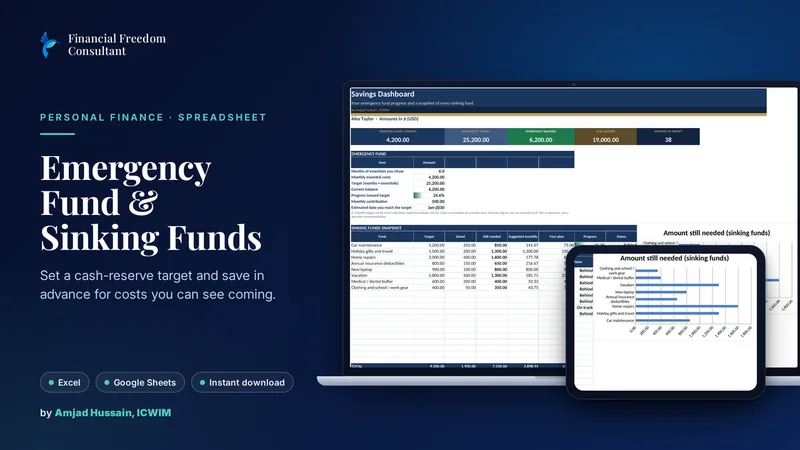 Emergency Fund Planner$6.99, instant downloadView →
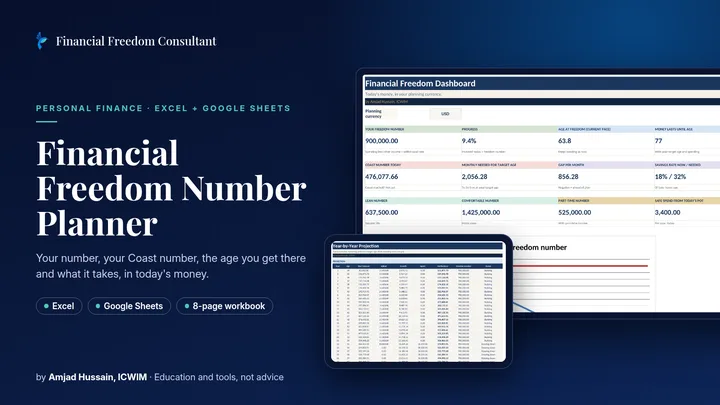 Financial Freedom Number Planner$17, instant downloadView →
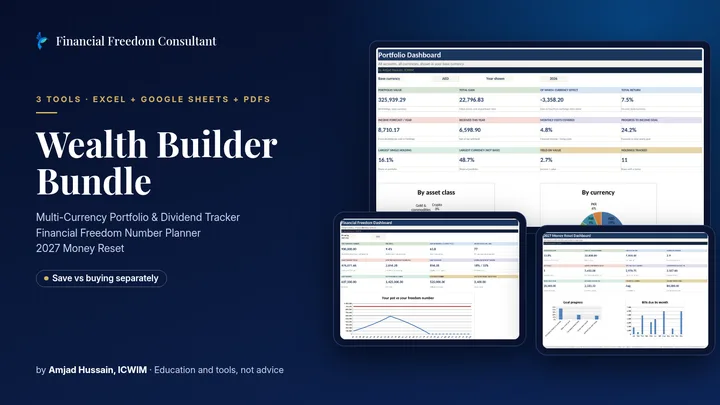 Wealth Builder Bundle: Portfolio Tracker + Freedom Number Planner + 2027 Year-End Money Plan$28.80 until 31 Dec (list $36), instant downloadView →
Frequently asked questions
What is the main difference between sukuk and bonds?
A bond is a loan that pays interest. A sukuk is a certificate of ownership in an underlying asset, project or activity, and its returns come from that asset, such as rent or profit share, not from interest.
Are sukuk safer than bonds?
Not automatically. Both carry issuer, interest-rate, liquidity and inflation risk. Check the issuer, the terms and what you actually own.
Can non-Muslims invest in sukuk?
Yes. Sukuk are open to Muslim and non-Muslim investors alike.
Do sukuk pay interest?
No. Sukuk pay returns such as rent or a share of profit from the underlying asset, though in practice the payments often resemble fixed-income coupons.
What happens to bond and sukuk prices when interest rates rise?
Prices of existing fixed-rate bonds and sukuk tend to fall when market rates rise, especially for longer maturities. Holding to maturity avoids selling at the lower price, but only if the issuer pays.
How can I buy sukuk in the UAE?
Through a licensed broker that offers listed sukuk, or through sukuk and bond funds. Individual issues can have large minimum sizes, so many investors use funds.
How do I know if a sukuk or fund is Shariah-compliant?
Look for the Shariah board or adviser named in the documents and the screening rules the fund publishes. If unsure, ask a qualified scholar about the specific product.
Sources
- IMF Working Paper: An Overview of Islamic Finance (sukuk and conventional bonds)
- AAOIFI: Accounting and Auditing Organization for Islamic Financial Institutions
- UAE Capital Market Authority
Want a person to check your numbers?
A free 15-minute intro call to see where you stand and what to do next. Education only, no tips, no pressure.
Short form first, so the call is useful for you.
Education only. Not investment, tax, legal or religious advice, and not a recommendation to buy, sell or hold any product. Rules and fees change; always check official sources. By Amjad Hussain, ICWIM (CISI Level 3 International Certificate in Wealth & Investment Management), accredited by the UAE Capital Market Authority, with 10+ years in financial markets. Dubai, UAE.