
 By Amjad Hussain, ICWIM · Accredited by the UAE Capital Market Authority · Updated 26 November 2026
How the calculator sets your target
The usual rule is 3 to 6 months of essential costs. That rule was written for people whose home, job and family are all in one country. Expats carry extra risk, so the calculator starts at 3 months and adds time for each risk you have, up to 12 months:
| Risk | Extra months |
|---|---|
| Uncertain industry | +1 |
| Commission, bonus-heavy or contract income | +2 |
| Self-employed or freelance | +3 |
| Single income household | +1 |
| 1–2 dependants / 3 or more | +1 / +2 |
| Residence visa tied to your job | +1 |
Then it adds a one-off moving-home buffer, because losing a job abroad can mean flights, shipping and a new deposit at short notice.
Why expats need a bigger cushion
- Your visa may depend on your job. If the job ends, you may have a limited grace period to find new work or leave. Grace periods depend on your visa type, so check the official rules for your country of residence.
- Family back home may depend on you. Remittances do not stop because your salary did.
- Gratuity is not instant. In the UAE it should be paid within 14 days of the job ending, but delays and disputes happen. Estimate yours with the UAE gratuity calculator, but do not count it as your emergency fund.
- Insurance helps, but only partly. In the UAE, the Involuntary Loss of Employment (ILOE) scheme pays a share of basic salary for a limited time if you are made redundant and meet the conditions. It helps; it does not replace a cash buffer.
Where to keep an emergency fund
- A separate savings account at a regulated bank, in the currency you spend.
- Not in shares, crypto or a fixed deposit you cannot break without large penalties.
- Split across two banks or two countries if you might need to leave quickly.
Read more: How much emergency fund do you need as an expat?
Go further with a ready-made planner
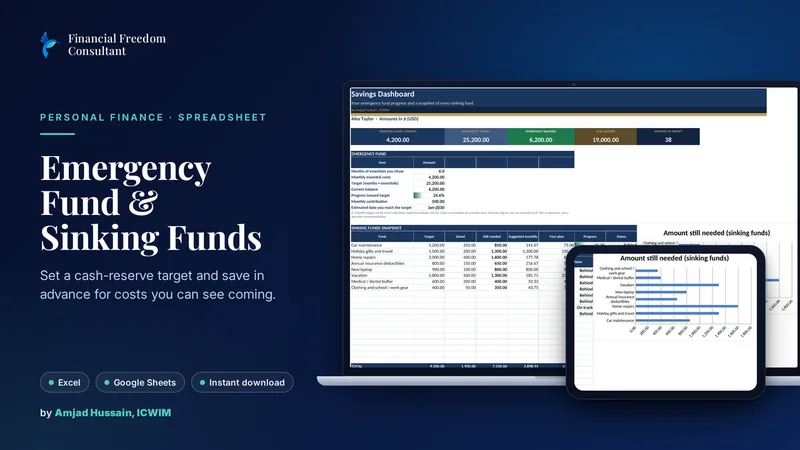 Emergency Fund Planner$6.99, instant downloadView →
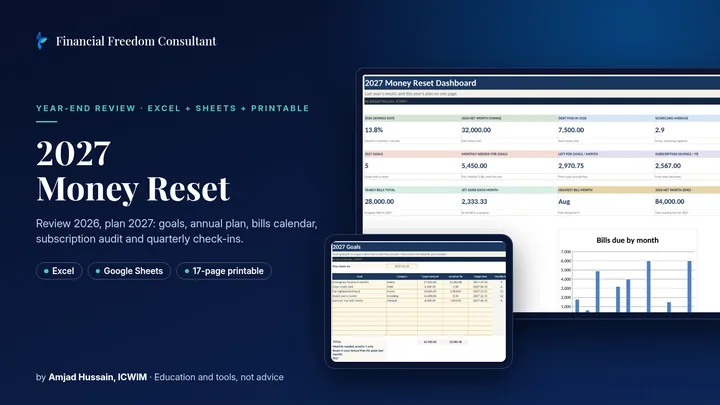 2027 Year-End Money Plan & Annual Plan$12, instant downloadView →Expat Budget & Remittance Planner$15, instant downloadView →
Frequently asked questions
How much emergency fund should I have?
A common rule is 3 to 6 months of essential costs. Expats, single-income households, people with dependants and anyone with irregular income often need 6 to 12 months. This calculator adds months for each of those risks.
Should my emergency fund cover my full salary?
No. It needs to cover essential costs only: housing, food, utilities, transport, school fees, insurance, minimum debt payments and essential money sent home. Leave out holidays, eating out and investments.
Where should I keep my emergency fund?
Somewhere safe and easy to reach quickly, such as a separate savings account at a regulated bank. Avoid keeping it in shares or crypto, which can fall just when you need the money.
Should I invest or build an emergency fund first?
Most planners suggest at least a starter fund (one month of essentials) before investing, then building the full fund alongside investing. Clear high-interest credit card debt early too.
Does gratuity count as an emergency fund?
It can help, but it should not be your only buffer. It is paid only when the job ends, it is based on basic salary only, and payment can be delayed or disputed.