
 By Amjad Hussain, ICWIM · Accredited by the UAE Capital Market Authority · Updated 26 November 2026
Snowball vs avalanche in plain English
Both methods start the same way: pay the minimum on every debt, then put every extra dirham, rupee or dollar on one target debt. When that debt is cleared, its payment “rolls over” to the next target.
| Debt avalanche | Debt snowball | |
|---|---|---|
| Target first | Highest interest rate | Smallest balance |
| Total interest | Lowest (mathematically best) | Same or a little higher |
| First win | Can take longer | Fast, which keeps many people going |
| Best for | People who stick to a plan | People who need momentum |
The calculator runs both, month by month, and shows the difference in money and time for your own debts. Often the gap is small, so the best method is the one you will actually follow. Read the full guide: debt snowball vs debt avalanche.
Worked example
Two credit cards at 36% and 30% and a personal loan at 9%, with 500 extra a month. The avalanche method attacks the 36% card first and pays the least interest. The snowball method clears the smaller 5,000 card first for a quick win. Both are far better than paying minimums only.
Tips that speed things up
- Stop adding new debt. Take the card out of your phone wallet while you pay it down.
- Ask about a balance transfer or a lower rate. Read the fees and the rate after the offer ends.
- Build a starter emergency fund of one month’s essentials so a surprise bill does not go back on the card: emergency fund calculator.
- Leaving the country? Clear or formally settle debts before you go. Unpaid loans and cards can lead to legal action. Our gratuity checklist covers this.
- Use windfalls. Bonus, gratuity or a tax refund can wipe out a whole debt in one go.
Go further with a ready-made planner
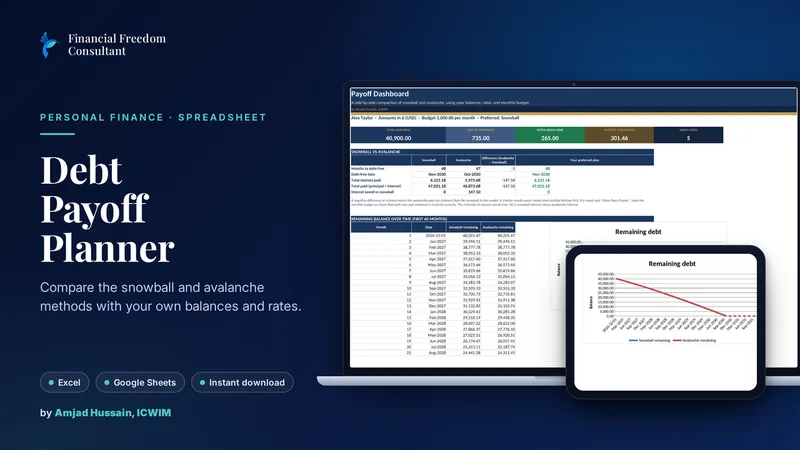 Debt Payoff Planner$7.99, instant downloadView →
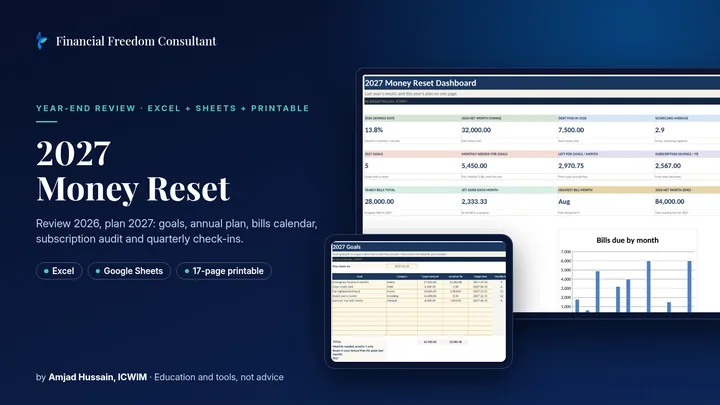 2027 Year-End Money Plan & Annual Plan$12, instant downloadView →
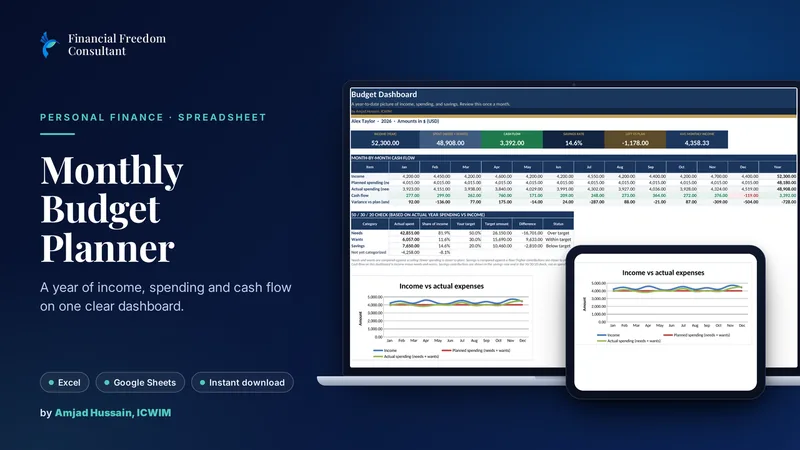 Monthly Budget Planner$8.99, instant downloadView →
Frequently asked questions
Is the snowball or avalanche method better?
The avalanche method (highest interest first) always costs the same or less interest. The snowball method (smallest balance first) gives faster early wins, which helps many people keep going. If the difference is small for your debts, choose the one you will stick with.
How is my debt-free date calculated?
The calculator adds a month of interest to each debt, pays every minimum, then puts your extra amount and any freed-up minimums on the target debt, repeating month by month until all balances reach zero.
Should I pay off debt or invest?
High-interest debt such as credit cards at 30% or more is very hard to beat with investments, so most people are better off clearing it first while keeping a small emergency fund.
What if my minimum payment does not cover the interest?
Then the balance will not fall on its own. The calculator warns you. Raise the payment, ask the lender for a lower rate, or speak to the lender about a repayment plan.
Does this include fees and daily interest?
No. It uses monthly interest from your APR and ignores fees, so real results can differ a little. Use it to compare plans, then follow your statements.