
HomeLearnDebt snowball vs avalanche
Debt snowball vs debt avalanche
 26 November 2026 · Amjad Hussain, ICWIM · Dubai, UAE
Two popular ways to pay off credit cards and loans. One saves the most interest, the other gives the fastest wins. Here is how to pick the one that works for you.
How both methods work
- List every debt with its balance, interest rate (APR) and minimum payment.
- Decide a fixed monthly amount you will put towards debt, above the total of all minimums.
- Pay the minimum on every debt.
- Put every extra amount on one target debt.
- When it is paid off, roll its whole payment onto the next target. The payment “snowballs”.
The only difference is the order of targets.
An example with real numbers
| Debt | Balance | APR | Minimum |
|---|---|---|---|
| Credit card A | 12,000 | 36% | 600 |
| Credit card B | 5,000 | 30% | 250 |
| Personal loan | 30,000 | 9% | 1,100 |
With 500 extra a month, the avalanche targets card A (36%) first, then card B, then the loan. The snowball targets card B (smallest) first, then card A, then the loan. Here both clear the cards first, so the gap is small, but the avalanche still saves some interest. Put your own debts into the calculator to see your exact difference and debt-free date.
What research says about motivation
A 2012 study in the Journal of Marketing Research by David Gal and Blakeley McShane, using data from a debt-settlement programme, found that people who closed more of their individual debt accounts were more likely to eliminate all their debt. Small wins seem to help people keep going. That is the case for the snowball, even though it is not the cheapest on paper.
Which should you choose?
- Choose avalanche if you are disciplined, your high-rate debt is large, or the calculator shows a big interest saving.
- Choose snowball if you have tried before and given up, or you have several small balances you could clear quickly.
- Hybrid: clear one or two tiny balances first for momentum, then switch to the avalanche.
Ways to get out of debt faster
- Freeze new spending on the cards you are paying off.
- Ask your bank for a lower rate, or consider a balance transfer, but read the fee and the rate after the offer ends.
- Keep a small emergency fund so new surprises do not go on the card: emergency fund calculator.
- Use windfalls: a bonus or part of your gratuity can wipe out a whole debt.
- Leaving the UAE? Settle debts and get clearance letters first; see the gratuity checklist.
Starting fresh in January? The 2027 Year-End Money Plan turns a review of 2026 into a debt and savings plan with quarterly check-ins.
After you are debt-free
Keep paying the same monthly amount, but to yourself: first to the emergency fund, then into investments. That payment habit is worth a lot; see the SIP calculator.
Tools that make this easier
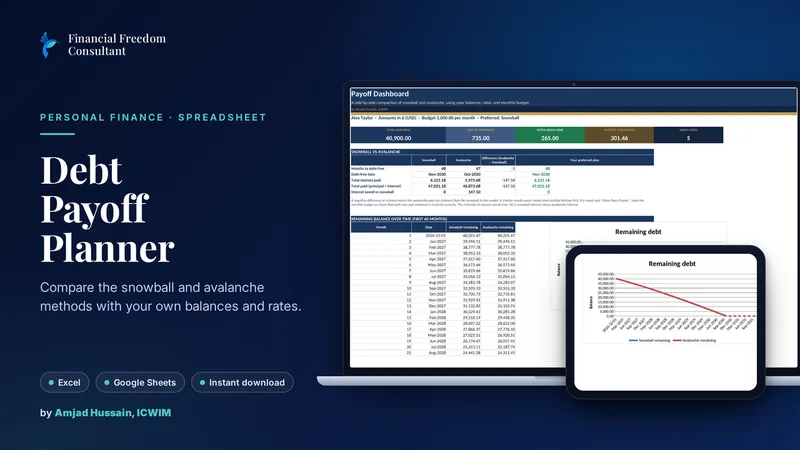 Debt Payoff Planner$7.99, instant downloadView →
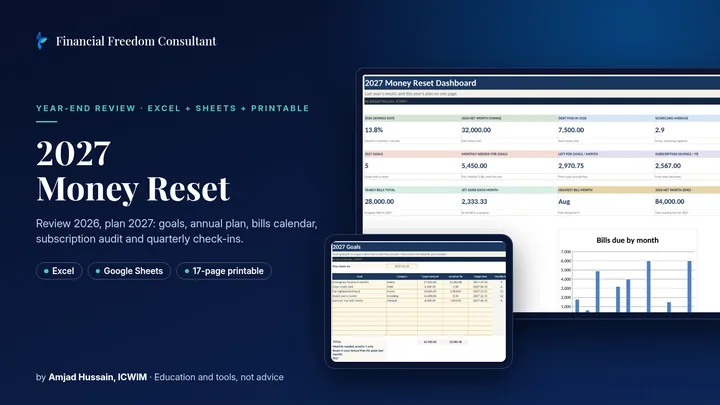 2027 Year-End Money Plan & Annual Plan$12, instant downloadView →
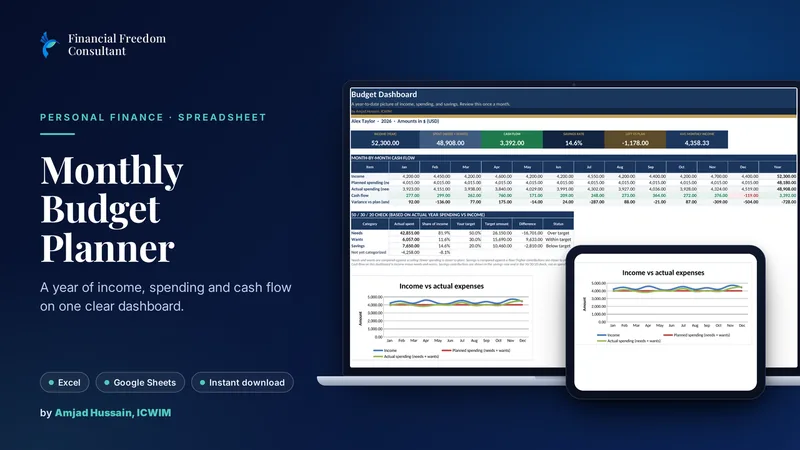 Monthly Budget Planner$8.99, instant downloadView →
Frequently asked questions
Which is better, debt snowball or avalanche?
The avalanche method saves the most interest because it targets the highest rate first. The snowball method gives faster early wins, which research suggests helps some people stick with the plan. Pick the one you will follow.
Does the debt snowball cost more?
It can cost the same or a little more interest than the avalanche, depending on your balances and rates. The calculator shows the exact difference for your debts.
Should I pay off debt or save first?
Most people keep a small starter emergency fund (around one month of essentials) and then focus on high-interest debt, building the full emergency fund afterwards.
Is it better to pay off a credit card or a loan first?
Usually the debt with the higher interest rate, which is often the credit card. The avalanche method does this automatically.
How can I pay off debt faster?
Add a fixed extra amount every month, roll payments over as each debt closes, avoid new borrowing, ask for lower rates, and use windfalls such as bonuses.
Sources
Want a person to check your numbers?
A free 15-minute intro call to see where you stand and what to do next. Education only, no tips, no pressure.
Short form first, so the call is useful for you.
Education only. Not investment, tax, legal or religious advice, and not a recommendation to buy, sell or hold any product. Rules and fees change; always check official sources. By Amjad Hussain, ICWIM (CISI Level 3 International Certificate in Wealth & Investment Management), accredited by the UAE Capital Market Authority, with 10+ years in financial markets. Dubai, UAE.