
HomeLearnSavings accounts and fixed deposits in the UAE
Savings accounts for expats in the UAE (and fixed deposits)
 26 November 2026 · Amjad Hussain, ICWIM · Dubai, UAE · Updated 29 November 2026
Cash is the foundation of every money plan, and in the UAE you have several places to keep it. This guide explains savings accounts, fixed deposits and Islamic alternatives, what to compare, and how to choose without chasing a headline rate. We do not name a “best” bank, because rates and terms change often.
What cash is for
Cash has three jobs: an emergency fund (usually three to six months of essential spending, and often more for expats), money for planned spending within the next few years, and a buffer so you do not have to sell investments in a market fall. It is not a way to build long-term wealth on its own, because over many years inflation can reduce what the money can buy. See how much emergency fund you need as an expat.
The main choices
| Option | How it works | Best for | Watch-outs |
|---|---|---|---|
| Current account | Everyday banking, usually little or no return | Salary and bills | Minimum balance fees, low or no return |
| Savings account | Access to your money, a variable rate, sometimes tiered by balance | Emergency fund, short-term goals | Rate can change; some need a minimum balance or have withdrawal limits |
| Fixed (term) deposit | You lock money for a set term at an agreed rate | Money you will not need until a known date | Penalty or loss of profit if you withdraw early |
| Islamic savings or deposit | Profit-sharing or trade-based contract instead of interest | Those who want Shariah-compliant cash | Rates are expected, not guaranteed; terms vary by bank |
| Savings plans linked to insurance | A policy that includes a savings element | Rarely the best first choice | High fees, long lock-ins and heavy penalties; read the contract |
What to compare
- The rate, and whether it is fixed. A fixed deposit rate is set for the term. A savings account rate can change. Check whether a high rate is only for a promotion period or only for balances above a certain level.
- Minimum balance and fees. A low minimum and no monthly fee suit a growing emergency fund. If you fall below a minimum balance, a fee can wipe out the interest.
- Access. How fast can you withdraw? Can you do it in the app? Are there limits on withdrawals or transfers?
- Early withdrawal rules. For a fixed deposit, ask exactly what you lose if you must break it.
- Currency. Dirham deposits are simple for dirham spending. Foreign-currency accounts can suit those who will eventually spend elsewhere, but exchange rates can move against you.
- What happens at maturity. Does the deposit renew automatically? At what rate? Diary the date.
- Protection. Ask whether deposits are covered by any guarantee or protection scheme, and do not assume. Banks in the UAE are supervised by the Central Bank, but you should check the current position directly.
- Who is the provider? Use a licensed UAE bank or finance company. Check the Central Bank’s list of licensed institutions.
How much to keep, and how to split it
A simple structure that many people use is three buckets:
- Bucket 1, instant access: your emergency fund in a savings account.
- Bucket 2, planned spending: money you need in one to three years, in a savings account or a fixed deposit that ends around the date you need it.
- Bucket 3, investments: long-term money that can ride out falls. See how to start investing in the UAE.
Our free emergency fund calculator helps you set the size of bucket 1 based on your job type, family and the cost of moving home.
Islamic savings options
Islamic banks offer deposit and savings products based on contracts such as mudaraba (profit-sharing) or wakala (agency). The bank declares an expected profit rate, but because the structure is not interest, the rate is not guaranteed in the same way. Ask the bank how the profit is calculated, how it is paid and who supervises the Shariah compliance. The product documents should name the Shariah board. For the wider picture, see Shariah-compliant investing in the UAE.
Traps to avoid
- Chasing the highest teaser rate without checking the conditions, then losing the rate after a few months.
- Locking away your emergency fund in a deposit with penalties. Emergencies do not wait for maturity.
- Leaving large balances in a current account that pays nothing.
- Buying a long insurance savings plan as a “saving” product without understanding the charges and the penalty for stopping.
- Ignoring inflation. Cash is safe from market falls, but not from rising prices. Money you will not need for many years usually needs a growth plan too.
- Trusting unsolicited “high-return deposit” offers from strangers or social media. Real deposit-takers are licensed banks; see how scams work.
A worked example, with made-up numbers
Suppose your monthly essential spending is AED 9,000 and you want an emergency fund of six months, so AED 54,000. You hold AED 20,000 in a current account paying nothing. A sensible reshuffle might be: keep about one month of spending, AED 9,000, in the current account for bills; move AED 45,000 target into a savings account as you build it; and, if you know you will pay for a family trip of AED 15,000 in twelve months, place that amount in a twelve-month fixed deposit that ends before the trip. The figures are invented to show the structure. Your numbers, your visa situation and your family needs will be different, so use the calculator rather than copying them.
When cash is no longer enough
Once your emergency fund is full and your debts are under control, money you will not need for several years may suit other assets, such as diversified funds, bonds and sukuk, or property funds. Each carries its own risks. The page Where can I invest? Fixed deposits and savings compares cash with other options, and the full overview shows the nine main routes.
Amjad teaches how to build the cash layer and the investing layer together in one-to-one sessions: see Manage Your Money and the Grow Your Money programmes. It is education only, not product advice. To talk it through, book a free 15-minute intro call.
Tools that make this easier
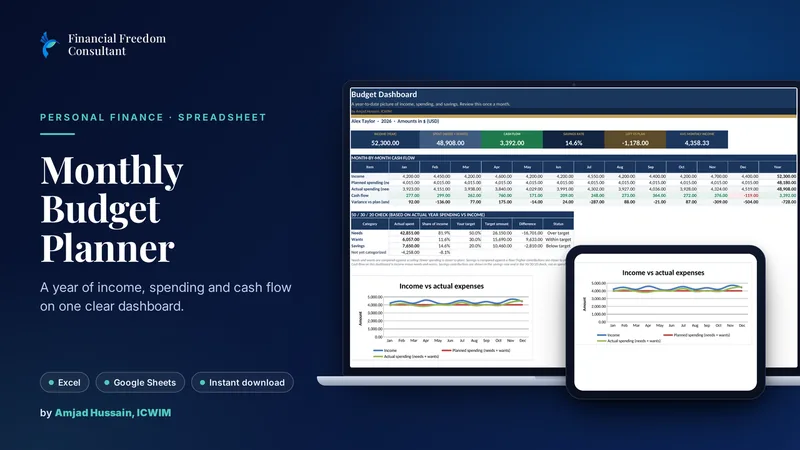 Monthly Budget Planner$8.99, instant downloadView →
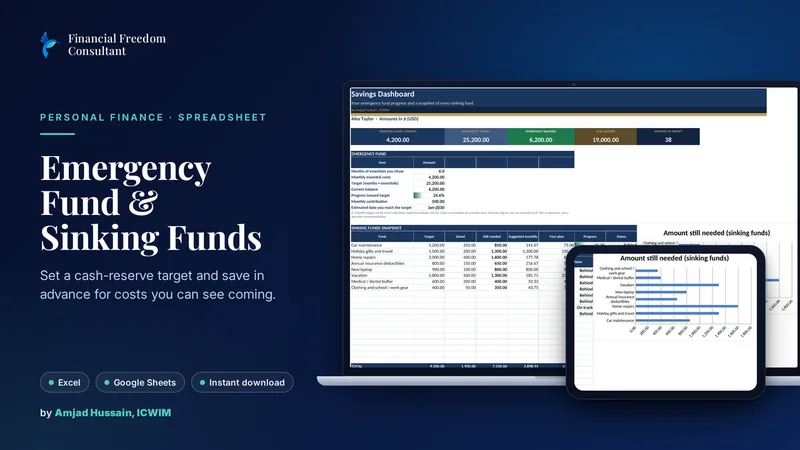 Emergency Fund Planner$6.99, instant downloadView →
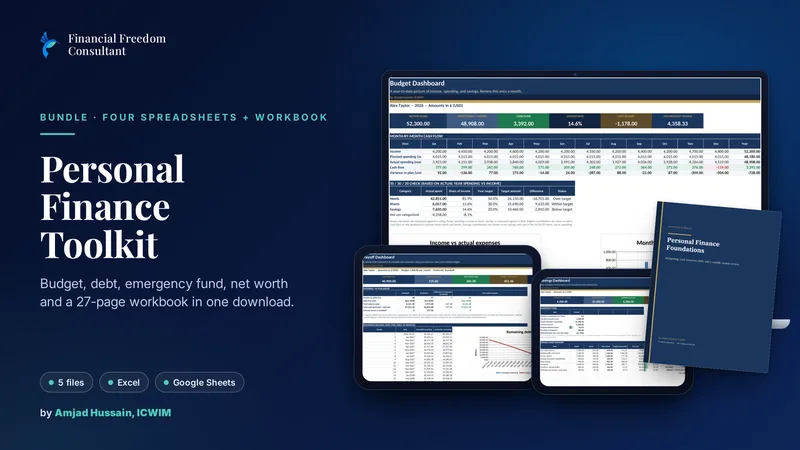 Personal Finance Toolkit Bundle$22.99, instant downloadView →
Frequently asked questions
What is the difference between a savings account and a fixed deposit?
A savings account lets you withdraw when you need to, usually at a variable rate. A fixed deposit locks your money for a set term at an agreed rate, with a penalty if you withdraw early.
Where should I keep my emergency fund?
In an account you can reach quickly without penalty, such as a savings account, not in shares or a locked deposit.
Are Islamic savings accounts different from conventional ones?
They use profit-sharing or trade-based contracts instead of interest. The profit rate is expected, not guaranteed, and terms vary by bank.
What should I check before opening a fixed deposit?
The rate and term, penalty for early withdrawal, what happens at maturity, the currency, and that the provider is a licensed institution.
Is cash a good long-term investment?
Cash is safe from market falls but can lose purchasing power to inflation over time, so money you will not need for many years usually needs a growth plan as well.
Do I pay tax on savings interest in the UAE?
The UAE does not charge personal income tax on savings interest, but your home country may tax your worldwide income. Ask a tax adviser.
Which UAE bank offers the best savings rate?
Rates and terms change often, so check each bank's current published terms and conditions rather than relying on a ranking.
Can expats open a fixed deposit in the UAE?
Yes. Most UAE banks offer fixed deposits to residents with a valid Emirates ID and a current or savings account, and some also accept non-residents. The minimum amount, term, rate and early-withdrawal penalty differ by bank, so compare the key facts statement before you lock money in.
Sources
- Central Bank of the UAE: licensed financial institutions and consumer protection
- UAE Government portal: banking services
- UAE Capital Market Authority
Want a person to check your numbers?
A free 15-minute intro call to see where you stand and what to do next. Education only, no tips, no pressure.
Short form first, so the call is useful for you.
Education only. Not investment, tax, legal or religious advice, and not a recommendation to buy, sell or hold any product. Rules and fees change; always check official sources. By Amjad Hussain, ICWIM (CISI Level 3 International Certificate in Wealth & Investment Management), accredited by the UAE Capital Market Authority, with 10+ years in financial markets. Dubai, UAE.