
HomeLearnShariah-compliant investing in the UAE
Shariah-compliant investing in the UAE
 26 November 2026 · Amjad Hussain, ICWIM · Dubai, UAE
If you want your investments to follow Islamic principles, the UAE offers more choices than many expats expect. But “halal” labels are not all equal. This guide explains how Shariah screening works for stocks, funds and sukuk, and the questions to ask before you invest. It is education, not a religious ruling.
The basic principles in simple words
- No interest (riba). You cannot earn or pay interest. Returns should come from sharing in real business profit, rent or trade.
- No excessive uncertainty (gharar) or gambling (maysir). Contracts should be clear, and you should not be speculating on pure chance.
- No prohibited businesses. Typical exclusions include alcohol, pork products, gambling, conventional banking and insurance, adult entertainment and, depending on the screen, tobacco and weapons.
- Real assets and risk-sharing. An investor should share in the risk and reward of a real activity.
- Purification. If a company that passes the screen earns a small amount of non-compliant income, many scholars ask investors to give that portion to charity. Funds often calculate it for you.
Halal stocks: how screening works
A company is usually checked in two steps.
Business screen
Is the main business permitted? A company that mainly produces alcohol or runs a casino fails. A technology or healthcare company may pass.
Financial screen
Even a company with a permitted business can fail if it has too much interest-bearing debt, holds too much cash in interest-bearing accounts, or earns too much of its income from interest. Different standards set different limits, which is why one provider may include a share that another excludes. Common screening standards come from Islamic finance bodies and from index providers. They are reviewed regularly, so a share can enter or leave a list.
Practical consequence: do not rely on a single website’s tick. Check which standard is used, and recheck from time to time. Many investors prefer to use a Shariah-screened fund, where a board does the checking and rebalancing.
Islamic funds and ETFs
A Shariah-compliant fund follows a screened index or a screened stock list and is overseen by a Shariah supervisory board. Before you buy, check:
- The name of the Shariah board or adviser in the fund documents.
- The screening rules and how often the portfolio is reviewed.
- How purification is handled.
- The fees, the index or approach it follows and its diversification.
- The domicile and regulation of the fund and where it is listed.
A “Shariah” label does not mean low risk. A Shariah-compliant equity fund still holds shares, and its price can fall. Our guide to index funds and ETFs explains the basics of how funds work.
Sukuk and Islamic fixed income
Sukuk are certificates representing ownership in assets or projects, paying returns linked to those assets. They are an Islamic alternative to bonds, though in practice they often behave similarly. Read sukuk vs bonds for the structure and risks, and note that the issuer’s ability to pay still matters.
Other halal-friendly choices
- Islamic savings and deposit accounts from Islamic banks, which use profit-sharing or trade-based contracts instead of interest. Rates are not fixed in the same way, and terms vary by bank.
- Gold bullion, which many scholars consider permissible when bought and sold with proper rules (for example on immediate exchange). Rules around digital and forward gold vary, so ask. See how to invest in gold in the UAE.
- Real estate and listed property funds, where the structure and financing should be checked. See UAE REITs explained.
- Business investment with clear profit-sharing terms, but with more risk and less liquidity.
What to avoid or question
- Margin trading, leveraged products and short selling, which often involve interest or gharar.
- Conventional bond funds, which pay interest.
- Anyone selling “halal” with guaranteed returns. Real Shariah-compliant investments involve risk. A guarantee is a red flag on both ethical and practical grounds.
- Unchecked labels. A mention of “Islamic” in the marketing is not a certificate.
Zakat on your investments
Investing does not remove your zakat obligation. How to calculate zakat on shares, funds and trading holdings depends on whether you trade or hold long term, and scholars use different methods. Our guide to zakat on shares and funds and the free zakat calculator explain the common methods. Ask a qualified scholar which method applies to you.
Questions to ask any provider of a “halal” product
- Who certified it? Ask for the name of the Shariah board or adviser, and look for it in the official documents rather than only in advertising.
- Which standard do they follow? A product can follow a recognised standard for screening, or its own rules. Neither is automatically right or wrong, but you should know which one you are getting.
- How often is it reviewed? Companies change. A share that passes today can fail after a change in debt or income, so the portfolio needs regular rebalancing.
- What happens to non-compliant income? Ask whether purification is calculated and who gives it away.
- What are the real fees? A Shariah fund may charge extra for supervision. Compare the total annual cost with similar conventional funds.
- What can I do if I disagree? If your scholar follows a stricter or different view, you may prefer another product or your own screening.
A note on disagreement
Qualified scholars sometimes disagree about details such as screening limits, certain sukuk structures and digital assets. That is normal, and it is why this guide avoids giving rulings. Choose a scholar or a standard you trust, follow it consistently and record what you decided and why. If your own situation is unusual, ask a scholar directly instead of relying on an internet list.
A simple way to start
- Build an emergency fund and clear expensive debt first.
- Decide the standard or scholar whose guidance you want to follow.
- Use a licensed broker and check it with the regulator’s register. See how to check if a broker is legal.
- Start with a diversified, screened fund rather than a few single shares.
- Invest regularly, review once a year, and recheck the screening.
Amjad’s Bonds and Sukuk Mentor and Stock Market Mentor programmes teach how stocks and sukuk work, one to one, so you can ask better questions of any Shariah-labelled product. They are education only, not religious rulings or tips. Not sure where to begin? Book a free 15-minute intro call.
Tools that make this easier
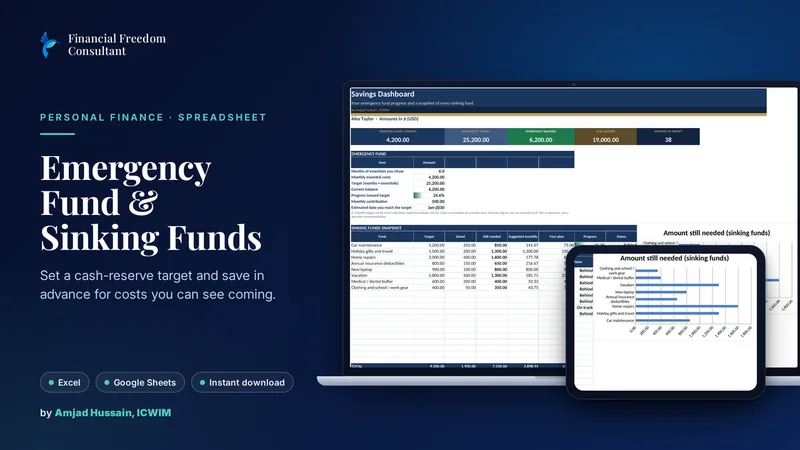 Emergency Fund Planner$6.99, instant downloadView →
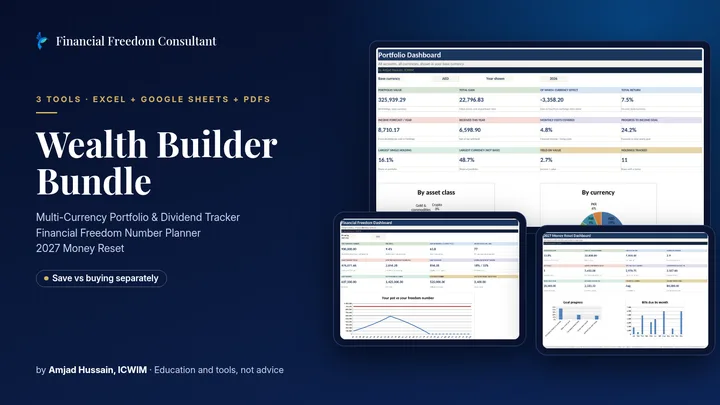 Wealth Builder Bundle: Portfolio Tracker + Freedom Number Planner + 2027 Year-End Money Plan$28.80 until 31 Dec (list $36), instant downloadView →
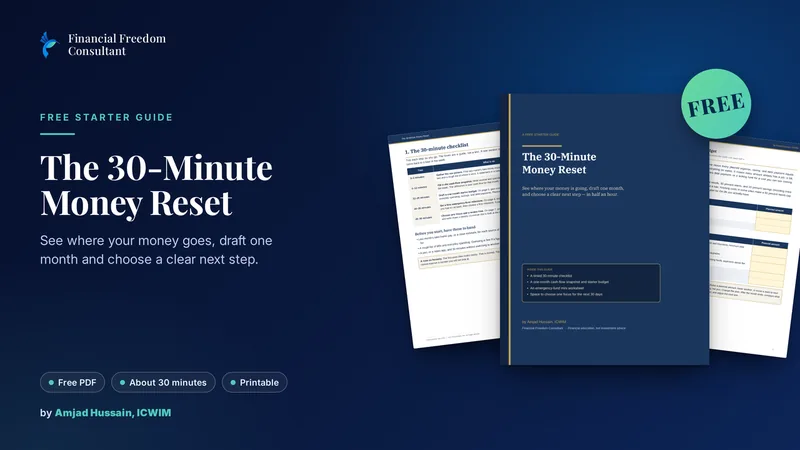 Free 30-Minute Money ResetFree, instant downloadView →
Frequently asked questions
What makes an investment Shariah-compliant?
It avoids interest, excessive uncertainty and gambling, excludes prohibited businesses and is linked to real assets or business activity. Details vary by standard and scholar.
How are halal stocks screened?
First by business activity, then by financial ratios such as debt, cash in interest-bearing accounts and interest income. Different standards use different limits.
Are Shariah-compliant funds available in the UAE?
Yes. Islamic funds and ETFs are available through banks and brokers. Check the Shariah board, the screening rules and the fees in the fund documents.
Are sukuk Shariah-compliant?
Sukuk are designed to be, but structures differ and scholars debate some of them. Check who certified the sukuk and read the terms.
What is purification in halal investing?
If a screened company earns a small amount of non-compliant income, many scholars ask investors to donate that portion to charity. Funds often calculate it for you.
Do I pay zakat on Shariah-compliant investments?
Yes. Zakat still applies, and the calculation depends on whether you trade or hold long term. Ask a qualified scholar which method to use.
Is a Shariah-compliant investment low risk?
No. Shariah compliance is about how the investment works, not about safety. Prices can still fall.
Sources
- AAOIFI: Accounting and Auditing Organization for Islamic Financial Institutions
- IFSB: Islamic Financial Services Board
- UAE Capital Market Authority
Want a person to check your numbers?
A free 15-minute intro call to see where you stand and what to do next. Education only, no tips, no pressure.
Short form first, so the call is useful for you.
Education only. Not investment, tax, legal or religious advice, and not a recommendation to buy, sell or hold any product. Rules and fees change; always check official sources. By Amjad Hussain, ICWIM (CISI Level 3 International Certificate in Wealth & Investment Management), accredited by the UAE Capital Market Authority, with 10+ years in financial markets. Dubai, UAE.