
HomeLearn10 money activities for teens at home
10 money activities for teens that parents can do at home
 26 November 2026 · Amjad Hussain, ICWIM · Dubai, UAE
Teenagers learn about money best by doing, not by being told. This guide gives you ten simple activities you can run at the kitchen table or over the school holidays, each with a goal, the steps and the question to ask afterwards. No special software is needed. It is education for families, not investment advice.
How to run these well
- Keep it short and regular. Twenty to forty minutes, once a week, beats one long lecture.
- Use real numbers. Their allowance, a phone plan, a trip they actually want.
- Ask, do not tell. After each activity, ask “What surprised you?”
- Let small mistakes happen. An AED 50 mistake at 14 is cheaper than an AED 50,000 one at 28.
- Be honest about your own money. Show a bit of how you decide, without sharing details you want to keep private.
For the bigger picture, read how to teach your teenager about money.
1. Track a week of spending
Goal: see where money really goes. Steps: for seven days your teen records every purchase, in a notes app or on paper. At the end, sort into needs, wants and “I do not remember”. Ask: what would you cut if you had to save 10%?
2. Build a holiday budget
Goal: practise planning. Steps: give a pretend budget, for example AED 3,000, for a three-day trip. Your teen lists flights, food, activities and a buffer, comparing at least two options for each. Ask: what did you trade off, and why?
3. Split the allowance into three jars
Goal: a habit of saving first. Steps: divide any money received into spend, save and give. Start with something like 50%, 30% and 20%, and let your teen change it after a month. Ask: what do you want the save jar to buy?
4. Set a savings goal with a date
Goal: connect saving to something they want. Steps: choose an item, such as a laptop at AED 2,400. Work out how much per week reaches it in 24 weeks (AED 100). Draw a chart and colour it in each week. Ask: what would speed it up?
5. Show compound growth
Goal: understand why starting early matters. Steps: use the table in our Rule of 72 guide. Compare AED 1,000 left for 10, 20 and 30 years at an assumed rate, or use the free SIP calculator. Ask: who would end up with more, someone who saves AED 200 a month from 16 to 26 and stops, or someone who starts at 26 and continues to 60? Let them test it.
6. Run a pretend portfolio
Goal: learn how prices move, with no real money at risk. Steps: pick a pretend AED 10,000 and choose a few well-known listed companies or an index fund. Record prices every week for eight weeks in a simple sheet. Talk about why prices changed and how a single company differs from a whole market. Ask: what would you have done in a bad week? Our index fund guide explains why many people prefer diversified funds.
7. Compare saving and borrowing
Goal: see how interest works both ways. Steps: use an example of buying a AED 3,000 phone on a monthly instalment plan compared with saving for it. Find the total cost of the instalments and compare. Ask: what did waiting save you?
8. Spot the scam
Goal: build a sceptical habit. Steps: show examples of fake giveaways, “guaranteed profit” groups, fake job offers and requests for codes. Ask your teen to find the warning signs. Use our scam guide and, for crypto, is crypto legal in the UAE? Ask: who benefits if I act fast?
9. Price a real-world job
Goal: connect work, income and value. Steps: your teen pitches a small paid task, such as tutoring younger children, washing cars or making and selling a craft, and works out costs, price and profit. Keep it safe and age appropriate, and check local rules on work for minors. Ask: what is your time worth per hour?
10. Write a one-page money plan
Goal: bring it together. Steps: your teen writes three goals, an amount per month for each, and one rule they will follow, such as “pay myself first”. Put it on the fridge and review it in three months. Ask: what will you change?
A sample four-week holiday plan
If your teen is home for a school break, you can spread the activities across a month without it feeling like homework.
- Week 1: activities 1 and 3. Track spending and set up the three jars.
- Week 2: activities 2 and 4. Plan the budget for a family outing and agree a savings goal.
- Week 3: activities 5 and 6. See compounding on paper and start the pretend portfolio.
- Week 4: activities 8 and 10. Spot the scams, then write the one-page plan and agree when you will review it.
Keep the pretend portfolio going after the break and check in monthly. Praise the effort and the questions, not the profit. Over time your teen will see how prices move, how patience helps and how quickly a “sure thing” can fail.
Adjusting for age
| Age | Best activities | Focus |
|---|---|---|
| 13–14 | 1, 3, 4, 8 | Habits, goals, spotting scams |
| 15–16 | 2, 5, 7, 9 | Planning, interest, earning |
| 17–19 | 5, 6, 7, 10 | Investing basics, independence |
Mistakes parents make
- Hiding money talk until it is a problem.
- Rescuing every mistake, which removes the lesson.
- Letting a teen invest real money in something they cannot explain. Start with pretend or very small amounts.
- Using money as a reward or punishment, which tangles it with emotions.
- Pushing a single “hot” idea, like a coin or stock, without discussing risk.
What to do next
Try one activity this week. If you would rather have a mentor take your teen through money management, stocks and crypto in a safe, structured way, see the teen programme for ages 13–19, or book a free Fit Call to ask questions. The programme is education only and does not recommend investments.
Tools that make this easier
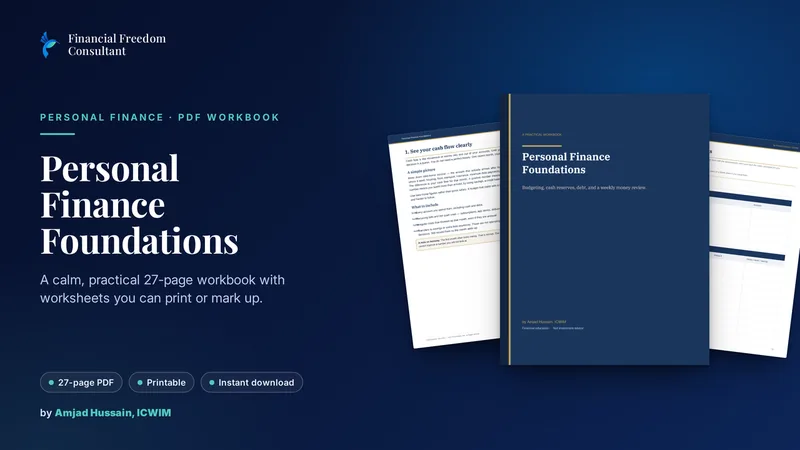 Finance Foundations Workbook$6.99, instant downloadView →
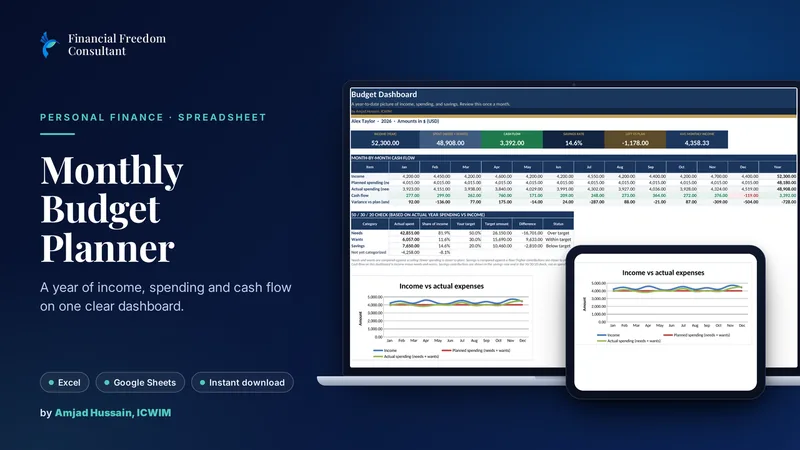 Monthly Budget Planner$8.99, instant downloadView →
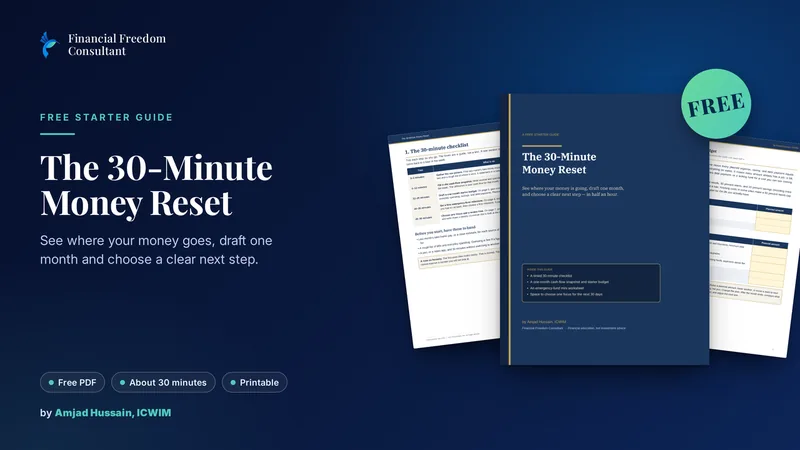 Free 30-Minute Money ResetFree, instant downloadView →
Frequently asked questions
What age should I start teaching my child about money?
Habits can start in primary school with saving jars, but structured lessons on budgeting, interest and investing suit ages 13 to 19. Match the activity to the maturity of your child.
How long should each activity take?
Between 20 and 40 minutes is enough. Short, regular sessions work better than one long talk.
Should my teenager invest real money?
Start with a pretend portfolio to learn how prices move. Any real investing should be small, supervised, and follow your country's rules for minors.
How do I teach teens about crypto safely?
Focus on risk and scams first. Show how prices swing, explain that no return is guaranteed and never share codes or keys. Our crypto scams guide has examples.
Do I need special tools?
No. A notebook, a spreadsheet and free calculators are enough. Our SIP calculator can demonstrate compound growth.
Is this the same as the teen programme?
No. These are free ideas for you to run yourself. The teen programme is one-to-one mentorship with a structured path, and it is education only.
Sources
- UAE Ministry of Education: parent resources
- U.S. Securities and Exchange Commission: investor.gov resources for young people
- Dubai Police: eCrime reporting
Want a person to check your numbers?
A free 15-minute intro call to see where you stand and what to do next. Education only, no tips, no pressure.
Short form first, so the call is useful for you.
Education only. Not investment, tax, legal or religious advice, and not a recommendation to buy, sell or hold any product. Rules and fees change; always check official sources. By Amjad Hussain, ICWIM (CISI Level 3 International Certificate in Wealth & Investment Management), accredited by the UAE Capital Market Authority, with 10+ years in financial markets. Dubai, UAE.