
Retire in Dubai: visa options and how much you need
 26 November 2026 · Amjad Hussain, ICWIM · Dubai, UAE
Many expats ask if they can stay in the UAE after they stop working. The answer is yes, with the right visa and enough money to fund the lifestyle. This guide explains the retirement visa and other residency routes, a method for estimating how much you need, and the planning gaps that catch people out.
Your residency options after work
The UAE retirement visa
The federal retirement residence permit is aimed at people who have worked and want to remain. As published by the federal authorities at the time of writing, an applicant needs to be at least 55 (or meet a long-service condition), and meet one financial route: UAE property of a minimum value, a deposit of a minimum amount in a UAE bank, or a minimum fixed monthly income, with bank statements as evidence. The headline amounts at the time of writing are AED 1 million for property or deposit, or AED 20,000 per month in income, but you should confirm these on the official Federal Authority for Identity, Citizenship, Customs and Port Security (ICP) website, because thresholds and documents change and individual emirates may add their own procedures. The permit is typically valid for a limited period and renewable.
Long-term residency (Golden Visa)
The UAE offers long-term visas to categories such as investors, entrepreneurs, specialised professionals and some property owners, each with its own conditions. If you qualify, it can give a longer period of residence without a job-linked sponsor. The criteria are set officially and change from time to time.
Residence through property
Owning property can support some visa routes above certain values. A property purchase should be a financial decision first, not only a visa step. Look at the full costs, financing and your exit plan.
Sponsorship by family
Some retirees stay as dependants of a working family member. This depends on the sponsor’s status and income, and it ends if their visa ends.
Whichever route you take, confirm details with the official portals, not with a salesperson who earns a commission from selling you property or a financial product.
How much do you need?
There is no single number. A simple method:
- Work out your yearly retirement spending in today’s money. Include rent or mortgage, utilities, food, transport, health insurance, travel, family support and leisure.
- Subtract guaranteed income, such as any pension from your home country, rental income or annuity.
- Multiply the gap by a cautious number, often called the FIRE number (for example 25 times yearly spending under a 4% withdrawal rule of thumb, which is a rough guide and not a guarantee).
- Add a buffer for health costs, inflation and one-off events such as moving.
Our full guide on how much you need to retire as a UAE expat works through examples, and the free FIRE calculator does the arithmetic with your own numbers.
The gaps that catch people out
- No state pension. Expats in the UAE do not build a UAE state pension in the way citizens do. End-of-service gratuity is a lump sum, not a lifetime income. See what to do with your gratuity.
- Health insurance. Costs usually rise with age, and cover for older people can be restricted or costly. Compare cover before you retire, and read exclusions.
- Rent and housing. If you rent, rent increases and moves are a risk. If you buy, you take on maintenance, service charges and resale risk.
- Visa dependence. If your income or deposit falls below the visa threshold, your residence may be at risk. Plan for the lower years too.
- Inflation. Fixed income buys less each year. Part of your money needs to grow.
- Currency and home country. If you might move home, your final spending currency matters. A dirham-based plan can be wrong if you retire in another country.
- Family and inheritance. Make a will that works in the UAE and in your home country, and tell your family where accounts are.
- Longevity. Plan for a long retirement, not an average one.
Investing for retirement income
Before retirement, many people build a mix of investments for growth. After retirement, the aim shifts toward income and stability while still keeping some growth. Typical building blocks include diversified shares and funds, bonds and sukuk, cash for near-term needs and, for some, property. The right mix depends on your age, needs and risk tolerance. See Where can I invest? for the options and how to start investing in the UAE for the first steps. Keep one to two years of spending in cash so you never need to sell investments in a market fall.
A checklist for the last ten years of work
- Write down your target retirement spending and date.
- Check the visa route you would use, and the amount it needs.
- Build or top up your investments with regular contributions.
- Get a health insurance review and price older-age cover.
- Decide where you will live and in which currency you will spend.
- Review your will and beneficiaries.
- Test your plan with lower returns and higher costs.
Amjad’s one-to-one Complete Investor Programme teaches how to build and manage a long-term portfolio across stocks, bonds, property funds and commodities, and how to plan toward goals such as retirement. It is education only, not personal financial advice or tax and legal advice. If you are within ten to fifteen years of your target date, a page for pre-retirees explains how the teaching applies. You can also book a free 15-minute intro call.
Tools that make this easier
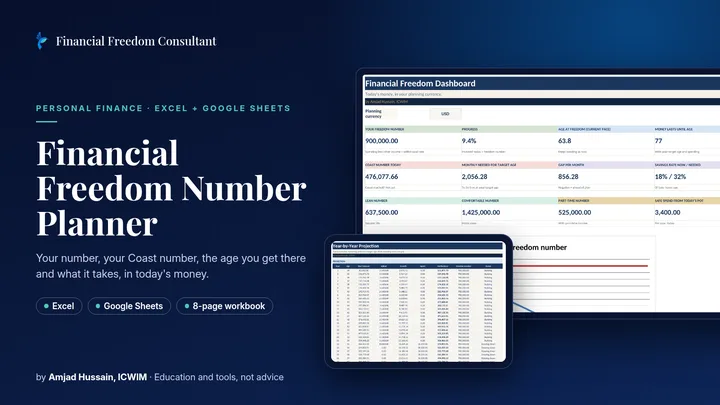 Financial Freedom Number Planner$17, instant downloadView →
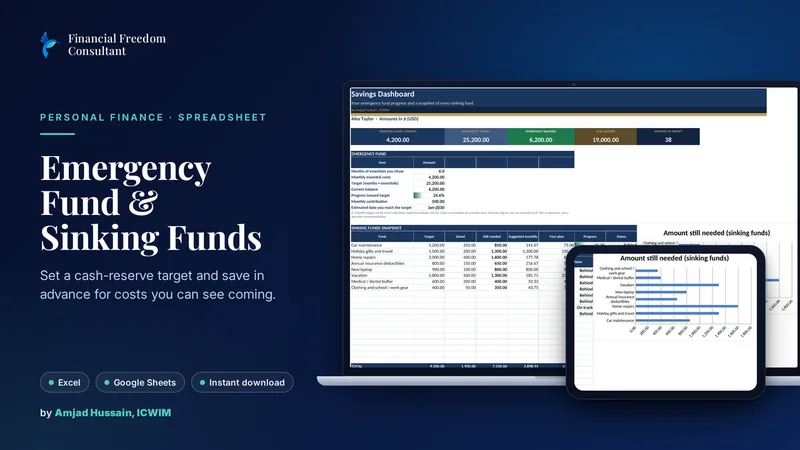 Emergency Fund Planner$6.99, instant downloadView →
 Wealth Builder Bundle: Portfolio Tracker + Freedom Number Planner + 2027 Year-End Money Plan$28.80 until 31 Dec (list $36), instant downloadView →
Frequently asked questions
Can I retire in Dubai as an expat?
Yes, if you hold a valid residence route, such as the retirement visa, long-term residency for which you qualify, property-linked residency or family sponsorship, and have enough money to fund your life.
What are the UAE retirement visa requirements?
At the time of writing, an applicant must be at least 55 (or meet a service condition) and show a property, deposit or income threshold, with bank statements. Check the current rules with the official ICP site.
Do expats get a state pension in the UAE?
No. Expats do not build a UAE state pension like citizens do. End-of-service gratuity is a lump sum, so most expats rely on their own savings and investments.
How much money do I need to retire in Dubai?
It depends on your spending. Estimate yearly spending, subtract guaranteed income, and multiply the gap by a cautious factor such as 25, then add a buffer. A FIRE calculator helps.
Is there income tax on retirement income in the UAE?
The UAE does not charge personal income tax on salary or most personal investment income, but your home country may tax you, so check your residence and citizenship position.
What is the biggest risk when retiring in the UAE?
Common risks include running out of money, rising health costs, losing visa eligibility if your income or deposit falls, inflation and currency mismatch if you later move home.
Does investing in property give me residency?
Some property purchases above set values support certain visa routes. Treat the purchase as a financial decision first, and check the official criteria.
Sources
- UAE Government portal: residence visa for the retired
- Federal Authority for Identity, Citizenship, Customs and Port Security (ICP)
- UAE Government portal: Golden Visa
Want a person to check your numbers?
A free 15-minute intro call to see where you stand and what to do next. Education only, no tips, no pressure.
Short form first, so the call is useful for you.
Education only. Not investment, tax, legal or religious advice, and not a recommendation to buy, sell or hold any product. Rules and fees change; always check official sources. By Amjad Hussain, ICWIM (CISI Level 3 International Certificate in Wealth & Investment Management), accredited by the UAE Capital Market Authority, with 10+ years in financial markets. Dubai, UAE.