
HomeLearnHow much do I need to retire as a UAE expat?
How much do I need to retire as a UAE expat?
 26 November 2026 · Amjad Hussain, ICWIM · Dubai, UAE
Most expats in the UAE will never get a pension from the UAE. That makes the question “how much is enough?” urgent. Here is a simple method you can do in 15 minutes.
Why expats must build their own pension
- The UAE’s federal pension system is for UAE nationals (GCC nationals are covered through their own countries’ schemes). Most foreign workers in the private sector are not members.
- Instead, you get an end-of-service gratuity: 21 days of basic wage per year for the first five years, 30 days after that, capped at two years’ wage. It is a lump sum, not an income. Check yours with the gratuity calculator.
- You may have small pension rights in your home country, but often far less than you will need.
Step-by-step: your number
Step 1: Where will you live, and what will it cost?
Write a yearly budget for retirement in that country’s currency. Include housing (even if you own, include upkeep), food, transport, health insurance, travel to family, helping parents or children, and a buffer for surprises.
Step 2: Subtract income you are sure of
Rent from a property, a home-country pension, a part-time income you are confident about.
Step 3: Divide by a withdrawal rate
| Withdrawal rate | Multiply spending by | Suits |
|---|---|---|
| 4% | 25 | A 30-year retirement (the classic rule of thumb) |
| 3.5% | about 28.6 | Retiring in your 50s, more margin |
| 3% | about 33.3 | Retiring in your 40s or earlier, very cautious |
Three worked examples
Moving home to Pakistan or India
Planned spending equal to AED 90,000 a year, with rent from a flat equal to AED 20,000. Need from investments: AED 70,000. At 3.5%: about AED 2.0 million equivalent.
Staying in Dubai
Spending AED 240,000 a year, no other income. At 4%: AED 6.0 million. At 3.5%: about AED 6.9 million. Health insurance and rent drive most of this.
Moving to the UK
Spending £36,000 a year, a UK State Pension expected later of about £12,000. Before the pension starts you need the full £36,000; after, about £24,000. Plan for both phases, or use the higher figure to be safe.
To track a portfolio spread across dirhams, dollars, pounds and rupees in one place, the Multi-Currency Portfolio & Dividend Tracker converts everything into the currency you will retire in.
Four risks to plan for
- Currency risk. Earning in AED (pegged to the US dollar) and retiring in rupees or pounds means exchange rates matter. Over time, invest more of your pot in the currency, or a global mix, that you will spend.
- Inflation. Prices double in about 24 years at 3% inflation. Always plan in today’s money; the calculator does this for you.
- Bad timing. A market fall just after you stop work hurts more than one later. Keep one to two years of spending in cash or short-term bonds when you retire.
- Health costs. Employer cover ends with the job; private cover gets more expensive with age.
How to close the gap
- Invest a fixed share of every salary, and raise it with each pay rise. See the SIP calculator.
- Do not spend your gratuity: what to do with your gratuity.
- Keep costs low: index fund vs ETF.
- Start now. Ten extra years of compounding often matter more than a slightly higher return.
Tools that make this easier
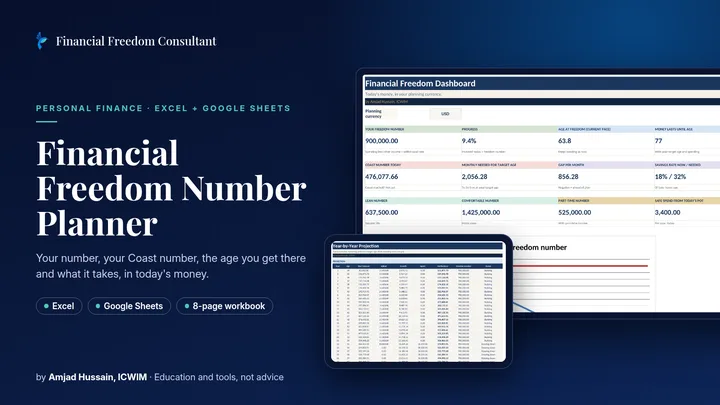 Financial Freedom Number Planner$17, instant downloadView →
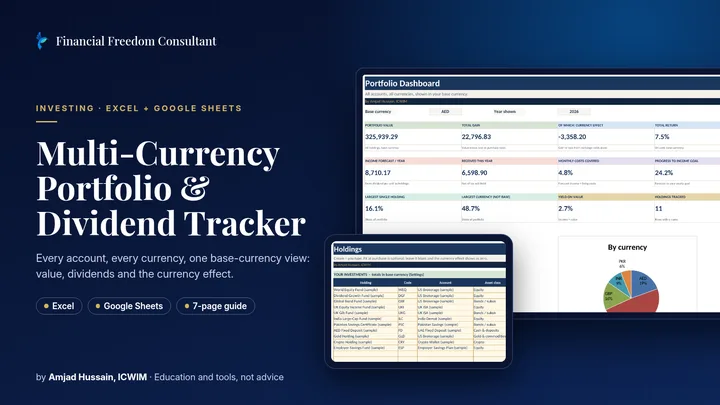 Multi-Currency Portfolio & Dividend Tracker$19, instant downloadView →
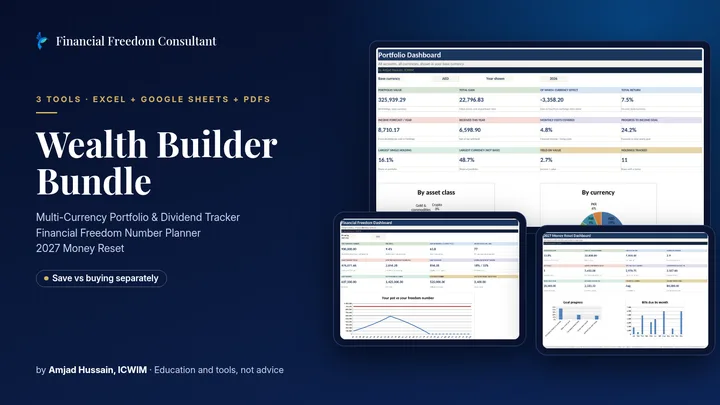 Wealth Builder Bundle: Portfolio Tracker + Freedom Number Planner + 2027 Year-End Money Plan$28.80 until 31 Dec (list $36), instant downloadView →
Frequently asked questions
Do expats get a pension in the UAE?
Generally no. The federal pension system covers UAE nationals, and GCC nationals are covered through their home schemes. Most foreign private-sector workers receive an end-of-service gratuity instead, unless their employer has joined the voluntary savings scheme.
How much do I need to retire comfortably in Dubai?
It depends on your spending. A simple estimate is yearly spending divided by 3.5% to 4%. For example, AED 240,000 a year of spending needs roughly AED 6 to 7 million invested.
What is the 4% rule?
A rule of thumb from US research suggesting that withdrawing 4% of a portfolio in the first year, then adjusting for inflation, historically lasted about 30 years. For longer retirements, many planners use 3% to 3.5%.
Should I count my gratuity in my retirement plan?
Yes, if you will invest it. Add it as a lump sum in the year you expect it in the FIRE calculator. Do not treat it as an income.
Which currency should I plan my retirement in?
In the currency you will spend in retirement. If you are not sure where you will retire, a global, diversified mix reduces the risk of guessing wrong.
Sources
- General Pension and Social Security Authority (GPSSA): pensions for UAE nationals
- UAE Government portal: End of service benefits in the private sector
- UAE Federal Decree-Law No. 33 of 2021, Article 51
- Bengen, W. P. (1994), Determining Withdrawal Rates Using Historical Data, Journal of Financial Planning
Want a person to check your numbers?
A free 15-minute intro call to see where you stand and what to do next. Education only, no tips, no pressure.
Short form first, so the call is useful for you.
Education only. Not investment, tax, legal or religious advice, and not a recommendation to buy, sell or hold any product. Rules and fees change; always check official sources. By Amjad Hussain, ICWIM (CISI Level 3 International Certificate in Wealth & Investment Management), accredited by the UAE Capital Market Authority, with 10+ years in financial markets. Dubai, UAE.