
HomeLearnSending money from the UAE: cost checklist
Sending money from the UAE to Pakistan or India: a cost checklist
 26 November 2026 · Amjad Hussain, ICWIM · Dubai, UAE
Millions of UAE residents send money home every month. Small differences in the exchange rate and fees add up to a large amount over a year. This guide gives you a simple checklist to compare the true cost, without naming one “best” provider, because prices change daily.
What a transfer really costs
Providers make money in two places, and the second is easy to miss.
- The fee. Some providers charge a flat fee or a percentage. Some advertise “zero fee”.
- The exchange-rate margin. The provider gives you a rate slightly worse than the real mid-market rate and keeps the difference. A “zero fee” transfer can still be costly if the margin is large.
The easiest way to compare is to ask: “If I send AED 2,000, how many rupees will my family receive, and when?” The provider that delivers the most for the same dirhams is the cheapest for that transfer at that moment. Rates move during the day, so compare at the same time.
The cost checklist
| Question | Why it matters |
|---|---|
| How much will the receiver actually get? | The only number that counts |
| What is the fee, if any? | Flat fees hurt small transfers more |
| How does the rate compare with the mid-market rate? | The hidden margin is often larger than the fee |
| Are there extra charges at the receiving end? | Some banks charge to credit incoming transfers |
| How fast is delivery? | Faster options may cost more |
| Which delivery method? | Bank account, mobile wallet or cash pickup have different costs and limits |
| What are the limits? | Daily, monthly and per-transfer limits and ID rules |
| Is there a promotion or loyalty rate? | Introductory rates may end; check the usual rate |
| Is the provider licensed? | Safety first |
Types of providers
- Exchange houses. Licensed by the Central Bank. Often fast and with cash pickup options. Compare their rate and fee against the others.
- Banks. Convenient if you already bank with them, but fees and margins may be higher for small amounts. Ask for the full cost.
- Digital remittance apps. Often show fees and rates upfront, with lower costs on some routes. Check they are licensed to serve UAE residents.
- Informal channels (such as hawala or a friend who “knows someone”). Avoid them. They can be unlawful, offer no protection if something goes wrong and have been linked to money laundering and fraud.
Safety checks
- Use a licensed provider. Check the Central Bank’s list of licensed exchange houses and finance companies, and type the website address yourself.
- Check the receiver’s details twice: name, account number, IBAN or wallet number. A typo can send money to the wrong person.
- Keep receipts and reference numbers until the money arrives.
- Beware of requests to send money “urgently” from someone claiming to be a relative or an official. Confirm by calling a known number.
- Ignore offers of “better rates” from strangers on social media.
Should I time the exchange rate?
Exchange rates move, and nobody can predict them reliably. A practical approach is to treat the transfer as a regular bill and keep the process simple: choose a provider that is consistently good, send on a schedule, and avoid last-minute panic transfers that carry high costs. For very large amounts, such as a property purchase, some people spread transfers over time to reduce the risk of a single bad rate. Think about it as risk management, not as speculation. For the bigger question of the currency you will spend in later, see how much you need to retire as a UAE expat.
A worked example, with made-up numbers
Suppose you send AED 2,000 home every month. Provider A charges a AED 10 fee and gives an exchange rate that is 0.4% worse than the mid-market rate. Provider B charges no fee but gives a rate that is 1.2% worse. The fee on A is 0.5% of the amount; adding the 0.4% margin makes its total cost about 0.9%, around AED 18. On B the total cost is 1.2%, around AED 24. So the “zero fee” option costs AED 6 more per month, or AED 72 a year, on this made-up example. The gap can go either way depending on the day and the route, which is why you compare the amount received each time, not the headline fee. The numbers are invented only to show the arithmetic.
Fees that hide in the details
- Receiving-bank charges. The money may leave with a clear fee and arrive a little lighter.
- Cash-pickup premiums. Some routes cost more for cash than for a bank deposit.
- Card-funded transfers. Paying by credit card can be treated as a cash advance and cost extra. Ask first.
- Speed upgrades. Same-day delivery can cost more than a next-day transfer.
- Rate refresh. The rate on screen may only last a few minutes. Complete the transfer within the window.
Make it part of your budget
- List your regular transfers and the total per month.
- Treat family support as a fixed cost in your budget, not a leftover.
- Compare providers twice a year. Prices change.
- Combine small transfers into fewer larger ones if fees are flat, as long as the family’s needs allow it.
- Protect your own savings. Pay your emergency fund and key goals first, then decide how much support is sustainable. See emergency fund for expats.
The Expat Budget & Remittance Planner helps you track money sent home next to your own spending and savings.
Investing for your family at home
Many expats also invest with a plan to support family or move home. Think about where and in which currency you will spend later. Some people invest in local assets in their home country, some in international funds, and some use a mix. Each has costs, tax rules and risks, which differ by country. Our guide to how to start investing in the UAE explains the first steps, and investing in US stocks from the UAE shows the tax issues to ask about.
Amjad teaches money management and investing one to one, in English, Urdu or Hindi: see Manage Your Money and education for expats. It is education only, not advice. To start, book a free 15-minute intro call.
Tools that make this easier
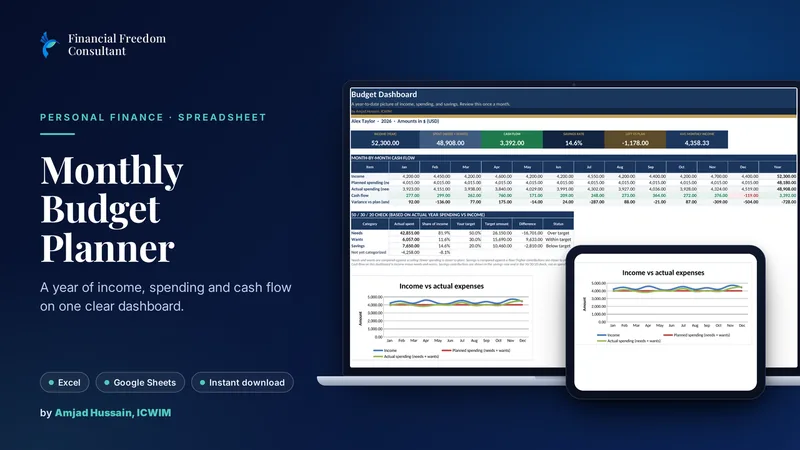 Monthly Budget Planner$8.99, instant downloadView →
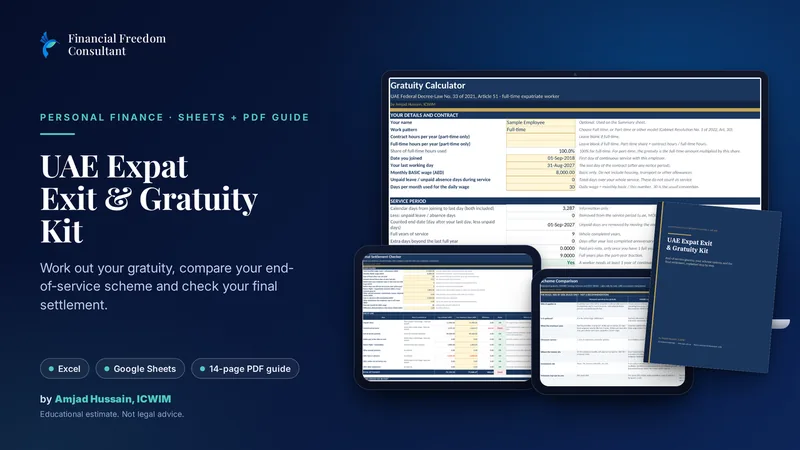 UAE Exit & Gratuity Kit$24, instant downloadView →
Frequently asked questions
What is the cheapest way to send money from the UAE to Pakistan or India?
It changes daily and depends on the amount, route and delivery method. Compare how much the receiver actually gets from a few licensed providers at the same time.
What is the exchange-rate margin?
It is the difference between the rate a provider gives you and the real mid-market rate. A provider can advertise zero fees and still make money through a wider margin.
Are exchange houses safe?
Licensed exchange houses are supervised by the Central Bank of the UAE. Check the provider is licensed and type the website address yourself.
Is hawala legal?
Informal value-transfer channels can be unlawful, offer no protection if something goes wrong and have been linked to fraud and money laundering. Use licensed providers.
Should I wait for a better exchange rate?
Rates cannot be predicted reliably. Most people do better by choosing a consistently good provider and sending on a regular schedule.
Are there charges at the receiving bank?
Some banks charge to credit incoming transfers. Ask the provider and the receiving bank before you send.
How can I track money I send home?
Keep receipts and reference numbers, and use a budget planner that lists regular transfers next to your savings.
Sources
- Central Bank of the UAE: licensed exchange houses and finance companies
- UAE Government portal: money transfer
- World Bank: Remittance Prices Worldwide
Want a person to check your numbers?
A free 15-minute intro call to see where you stand and what to do next. Education only, no tips, no pressure.
Short form first, so the call is useful for you.
Education only. Not investment, tax, legal or religious advice, and not a recommendation to buy, sell or hold any product. Rules and fees change; always check official sources. By Amjad Hussain, ICWIM (CISI Level 3 International Certificate in Wealth & Investment Management), accredited by the UAE Capital Market Authority, with 10+ years in financial markets. Dubai, UAE.