
HomeLearnWhat to do with a lump sum in the UAE
What to do with a lump sum in the UAE
 26 November 2026 · Amjad Hussain, ICWIM · Dubai, UAE
A large sum of money, whether from end-of-service gratuity, a bonus, an inheritance, a property sale or a business exit, can feel exciting and stressful at the same time. This guide gives you a calm order of questions to work through, so that you decide on purpose rather than in a rush. It is education, not advice, and we do not recommend any product.
Step 1: pause and park it
Big sums attract attention from salespeople, friends, relatives and scammers. Nothing about a lump sum has to be decided this week. Put it somewhere safe, such as a savings account at a licensed bank, and tell as few people as you need to. A pause of a few weeks costs you very little and protects you from rushed choices. See how scams work to recognise common pressure tactics.
Step 2: know exactly what you have
- Is it the final amount? A gratuity or settlement can be adjusted after clearance, notice and deductions. See what to do with gratuity and use the gratuity calculator.
- Is any of it owed? Taxes in your home country, loans, a visa cancellation fee, or money you promised to someone.
- Is it in the currency you need? If you will spend elsewhere later, think about the exchange rate.
Step 3: a sensible order of questions
- Do I have an emergency fund? If not, set aside three to six months of essential spending, or more if your job or visa is uncertain. Our emergency fund guide explains how to size it.
- Do I have expensive debt? Credit cards and personal loans usually cost more than savings accounts pay, so paying them down is often the most certain improvement. See snowball vs avalanche.
- Do I know what is coming in the next one to three years? A move, school fees, a wedding, a home deposit. Money needed soon should stay in low-risk cash, not in markets. See savings accounts and fixed deposits.
- Am I on track for retirement? Check with the retirement number guide and the FIRE calculator.
- Is there protection in place? Health, life and income protection matter before you invest for growth.
- What is left for long-term investing? Only now do you decide how much goes into growth assets and how.
Step 4: if you decide to invest, how to think about it
Three ideas help most people. First, time horizon: money you will not touch for five to ten years or more can ride out market falls, while money you need sooner should not be exposed to them. Second, diversification: spreading across many companies, sectors and regions through funds reduces the damage from any one failure. Third, costs: fees compound against you just like returns compound for you.
A common question is whether to invest everything at once or in steps. Research on past markets has often found that a lump sum invested at once did better than spreading it over a few months in a majority of periods, because markets tend to rise more often than they fall. But investing in steps can feel easier to live with if a drop right after you invest would be hard to take. Neither approach is guaranteed to win, and we explain the trade-off in dollar-cost averaging vs lump sum. The right choice depends on how you would behave in a fall.
A worked example, with made-up numbers
Suppose someone leaves a job and receives AED 120,000 in gratuity and leave pay. Monthly essentials are AED 8,000. They have AED 15,000 in savings and a credit card balance of AED 18,000.
| Step | Amount (AED) | Why |
|---|---|---|
| Pay off the credit card | 18,000 | Removes costly debt first |
| Top up emergency fund to 6 months | 33,000 | 6 × 8,000 = 48,000 target, minus 15,000 already saved |
| Known cost in 18 months (school and move) | 25,000 | Kept in cash, not markets |
| Remaining for long-term goals | 44,000 | Decide with a plan: retirement, education, investing |
The numbers are invented to show the order, not to suggest any amount for you.
Tax and paperwork
The UAE has no personal income tax, but your home country may tax a bonus, a sale or an inheritance, and may require you to declare foreign assets. Keep the payslip, settlement letter, sale contract or inheritance papers, and ask a qualified tax adviser where you are tax resident. Remember that residence rules, not nationality alone, decide this.
Traps to avoid
- The “limited-time” offer. Real long-term decisions do not expire this week.
- Complex products you cannot explain. If you cannot explain it to a friend, do not buy it. Insurance-wrapped savings plans with long lock-ins and heavy exit charges are a common example.
- Lending to friends and relatives without a clear agreement you can afford to lose.
- Putting everything in one property, one company or one coin.
- Unlicensed advisers. Check any firm or individual on the regulator’s public register before you share details. See how to check if a broker is legal.
- Doing nothing forever. Cash is safe from market falls but can lose value to inflation over many years.
Questions to ask any provider before you hand over money
- Are you licensed, by which regulator, and what is your registration number?
- What exactly do I own, and where is it held?
- What are all the fees, one-off and ongoing, in writing?
- What can go wrong, and how much could I lose?
- How and how quickly can I take my money out, and at what cost?
- What happens if your firm fails?
- Why is this suitable for my situation and not just for yours?
A genuine provider answers clearly and gives you time. If the answers are vague, or you are told to decide today, walk away. Write the answers down and compare at least two providers.
Getting a second pair of eyes
A lump sum is a good moment to write a one-page plan. The $79 Money Clarity Call is a 30-minute session where we go through your numbers and questions, education only. Or book a free Fit Call first to see whether it suits you. For ongoing guidance, see the Grow Your Money programmes.
Tools that make this easier
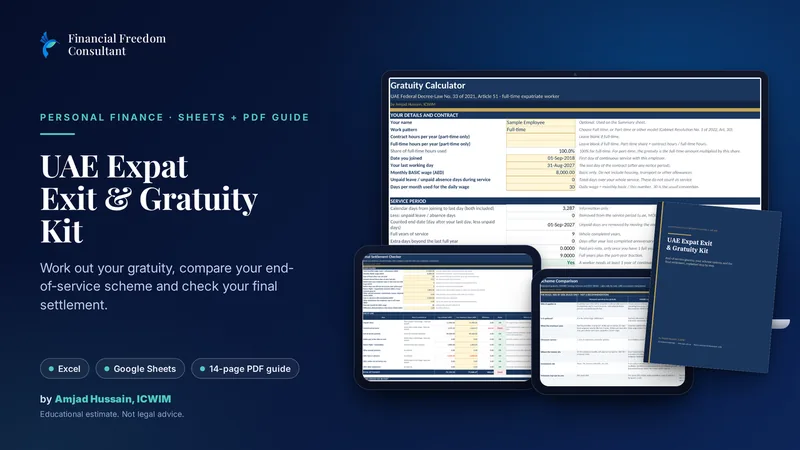 UAE Exit & Gratuity Kit$24, instant downloadView →
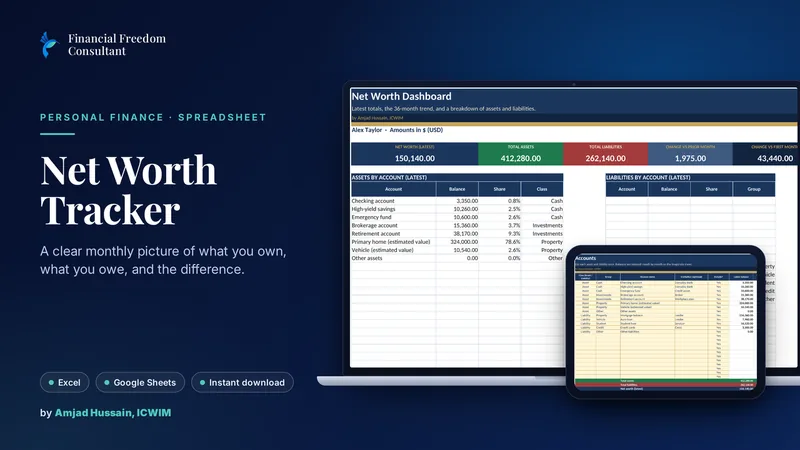 Net Worth Tracker$6.99, instant downloadView →
Frequently asked questions
What should I do first when I receive a large sum?
Pause. Put it in a safe account at a licensed bank, avoid rushed decisions, and work out what you owe, what you need soon and what you can leave alone.
Should I pay off debt or invest?
Expensive debt such as credit cards usually costs more than savings earn, so many people clear it first. The right balance depends on interest rates and your situation.
Should I invest a lump sum all at once?
Studies of past markets often found that investing at once did better than spreading it over several months in a majority of periods, but it is not guaranteed and can feel hard if markets drop. Choose an approach you can stick with.
How much should I keep in cash?
Keep money you need within the next few years, plus an emergency fund of three to six months of essentials, in low-risk accounts.
Do I pay tax in the UAE on an inheritance or bonus?
The UAE does not charge personal income tax, but your home country may tax it or require you to declare it. Ask a qualified tax adviser.
Who can I trust to advise me?
Use firms and individuals who appear on the relevant regulator's public register, and be cautious about unsolicited offers. We provide education, not personal investment advice.
Sources
- UAE Government portal: end-of-service gratuity
- Vanguard research: lump-sum investing versus dollar-cost averaging (2023)
- Central Bank of the UAE: licensed institutions
Want a person to check your numbers?
A free 15-minute intro call to see where you stand and what to do next. Education only, no tips, no pressure.
Short form first, so the call is useful for you.
Education only. Not investment, tax, legal or religious advice, and not a recommendation to buy, sell or hold any product. Rules and fees change; always check official sources. By Amjad Hussain, ICWIM (CISI Level 3 International Certificate in Wealth & Investment Management), accredited by the UAE Capital Market Authority, with 10+ years in financial markets. Dubai, UAE.