
HomeLearnHow much to save every month in the UAE
How much should you save every month in the UAE?
 26 November 2026 · Amjad Hussain, ICWIM · Dubai, UAE
There is no single right number, but there is a simple way to find yours. This guide explains the 50/30/20 rule in dirhams, shows why it needs adjusting for life in the UAE, and walks through worked examples with made-up salaries so you can copy the method with your own figures. It is education, not personal advice.
You can also run the numbers in our free UAE salary savings calculator, which applies 50/30/20 in dirhams and can compare the split with your rent and other costs.
What the 50/30/20 rule says
The rule splits your take-home pay, meaning what reaches your bank after any deductions, into three buckets:
- 50% needs: rent, utilities, groceries, transport, school fees, insurance, minimum debt payments.
- 30% wants: dining out, trips, subscriptions, shopping, hobbies.
- 20% saving and extra debt repayment: emergency fund, investing, retirement, paying debt faster than the minimum.
It is a rule of thumb, not a law. Its value is that it gives you a first question to ask: is the money I spend on needs and wants leaving enough room for my future?
The rule in dirhams
| Monthly take-home pay | Needs (50%) | Wants (30%) | Saving (20%) |
|---|---|---|---|
| AED 6,000 | AED 3,000 | AED 1,800 | AED 1,200 |
| AED 10,000 | AED 5,000 | AED 3,000 | AED 2,000 |
| AED 15,000 | AED 7,500 | AED 4,500 | AED 3,000 |
| AED 25,000 | AED 12,500 | AED 7,500 | AED 5,000 |
These are made-up examples to show the maths. Your own numbers will differ.
Why the UAE needs a tweak
- Rent can be well over 50% of a modest salary. In that case, do not give up. Look at the other categories, and treat 20% as a direction rather than a pass-or-fail test.
- No personal income tax means more of your pay reaches you, which makes a higher saving rate possible for many people.
- Money sent home to family is a real, regular cost for many expats. Count it as a need if you must send it, and see our remittance cost checklist to keep the cost down.
- Job and visa risk. Your residence is often tied to your job, so a larger emergency fund than a local employee might keep makes sense. Our emergency fund guide shows how to size it.
- End-of-service gratuity is not a substitute for personal savings. See what to do with gratuity.
A simple way to find your number
- Find your take-home pay for a normal month.
- List fixed needs such as rent, bills, school fees and debt payments. Add them up.
- Estimate variable needs such as groceries and transport using the last three months of bank statements.
- Add the wants you honestly spend on now.
- Compare to the 50/30/20 split. The gap shows where your money goes.
- Choose a target saving rate you can keep, for example 10% now, rising by 1% every few months.
- Automate it. Set up a standing order on salary day to move the saving amount into a separate account, so you save first and spend what remains.
Two worked examples, with made-up numbers
Single professional, AED 12,000 take-home. Rent and bills are AED 5,500, groceries and transport AED 1,500, so needs are AED 7,000, about 58%. Wants are AED 3,000, 25%. That leaves AED 2,000, about 17%. Close to the rule. A small trim in wants, such as AED 500 less, takes saving to AED 2,500 a month, or AED 30,000 a year.
Family of four, AED 20,000 take-home. School fees, rent and bills take AED 14,000 (70%), groceries and transport AED 2,500, so needs are about 82%. There is little room, and the rule would be unrealistic. A better plan is to save AED 1,000 a month (5%) now, protect an emergency fund first, and review school and housing costs once a year. The point is to start, then raise the rate when income grows.
What to save for first
- Starter emergency fund: one month of essential spending.
- High-interest debt: pay down credit cards and personal loans, which usually cost more than savings earn. See snowball vs avalanche.
- Full emergency fund: three to six months of essentials, or more if your income is uncertain.
- Long-term goals: retirement, children’s education, home purchase. Our guide to starting to invest in the UAE explains the next step.
Use the free SIP calculator to see how a monthly amount can grow over time under assumptions you choose, and remember that investment values can fall as well as rise.
Common mistakes
- Saving what is left instead of paying yourself first.
- Counting gratuity as savings and not building your own pot.
- Setting a target you cannot keep. Start smaller and stay consistent.
- Not tracking subscriptions and small recurring charges.
- Keeping all savings in a current account that pays nothing. See choosing savings accounts and fixed deposits.
- Lifestyle creep. When pay rises, raise your saving rate before your spending.
If your income is irregular or has commission
Many people in the UAE earn a base salary plus commission, or run a business with uneven months. A percentage of every payment can be hard to keep. A steadier approach is to base your budget on your lowest normal month over the past year, and treat anything above it as extra. When a strong month arrives, split the extra: part to the emergency fund, part to debt or goals, and a small part to enjoy. This keeps your lifestyle tied to the reliable income, not the best month.
Plan for the costs that arrive once a year
Car registration, insurance renewals, visa fees, school re-enrolment, annual flights home and gifts at festival time do not appear in a monthly budget until they arrive. List them, add them up, and divide by 12. If these add up to AED 24,000 a year, put AED 2,000 a month into a separate “annual costs” account. When the bill comes, the money is already there, and you avoid using a credit card for predictable expenses. Many missed savings goals are really missing annual costs.
When a plan beats a rule
Rules of thumb are a starting point. If your income is irregular, you have a business, or you are saving for a particular goal such as a home or a move, a written plan with real numbers does more than a percentage. The Manage Your Money section has planners that do the arithmetic, and you can book a free Fit Call if you want to talk through where to start.
Tools that make this easier
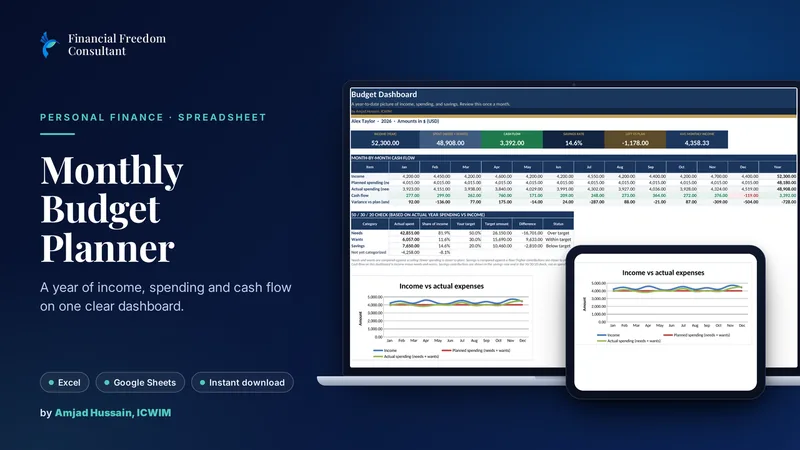 Monthly Budget Planner$8.99, instant downloadView →
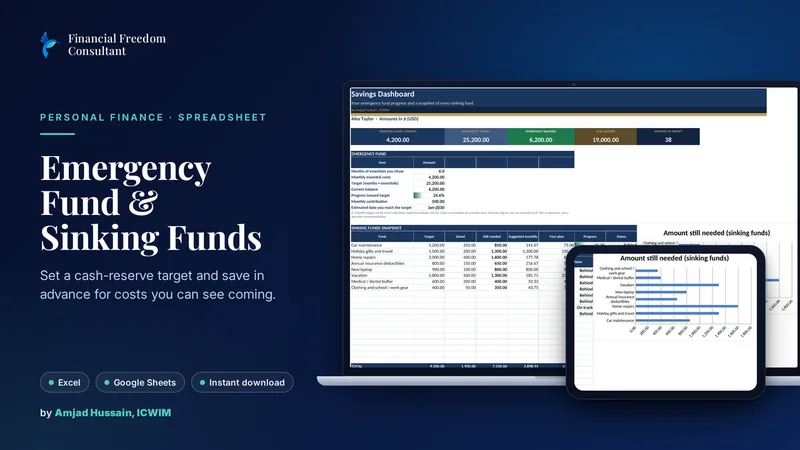 Emergency Fund Planner$6.99, instant downloadView →
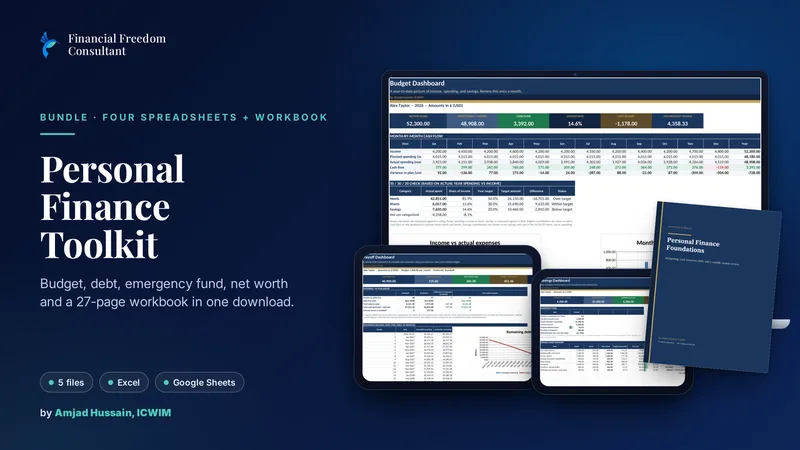 Personal Finance Toolkit Bundle$22.99, instant downloadView →
Frequently asked questions
What is the 50/30/20 rule?
It splits take-home pay into 50% needs, 30% wants and 20% saving and extra debt repayment. It is a rule of thumb to start a conversation with your own numbers, not a strict requirement.
Is saving 20% realistic in the UAE?
For some people yes, especially with no personal income tax. For families with high rent and school fees it may be out of reach at first. Start with a rate you can keep and raise it over time.
Should I pay off debt or save first?
Most plans build a small starter emergency fund first, then pay down high-interest debt, then complete the emergency fund. Your situation may differ, so check the numbers.
How much emergency fund do expats need?
Many people aim for three to six months of essential spending, and expats whose visa depends on their job often aim higher. Our emergency fund calculator helps you pick a figure.
Does gratuity count as my savings?
It is a useful lump sum, but it depends on your employer, contract and length of service, and it can be reduced by job changes. Build personal savings in addition.
Where should I keep the money I save?
Short-term money usually sits in a savings account, and long-term money may be invested. Compare fees, access and risk before you choose.
Sources
- UAE Government portal: banking and finance services
- Central Bank of the UAE
- UAE Government portal: saving and investing
Want a person to check your numbers?
A free 15-minute intro call to see where you stand and what to do next. Education only, no tips, no pressure.
Short form first, so the call is useful for you.
Education only. Not investment, tax, legal or religious advice, and not a recommendation to buy, sell or hold any product. Rules and fees change; always check official sources. By Amjad Hussain, ICWIM (CISI Level 3 International Certificate in Wealth & Investment Management), accredited by the UAE Capital Market Authority, with 10+ years in financial markets. Dubai, UAE.