
HomeLearnInvesting for women in the UAE
Investing for women in the UAE: first steps
 26 November 2026 · Amjad Hussain, ICWIM · Dubai, UAE
Many women in the UAE earn well, support families at home and abroad, and still feel unsure about investing. You are not behind, and you do not need to be an expert. This guide gives you a calm, practical order of steps, from your safety net to your first investment, in plain English.
Why this matters in particular for expat women
Life paths differ, but several patterns appear often in the lives of women living abroad. Careers can have gaps for caring or relocation. Many women support parents or siblings back home. Visa status may depend on a spouse or an employer. End-of-service gratuity is a lump sum, not a pension, and there is no state pension for most expats. And in many households, one person handles the investing while the other has little visibility. None of these is a reason to wait. Each is a reason to have your own plan and your own understanding.
The goal is financial independence in the plain sense: you know what you have, you can make decisions for yourself, and you have a cushion if life changes suddenly.
Step 1: Know your numbers
Write down, in one place: your income, your regular spending, your savings and investments, your debts, and any money you owe or are owed. Include jointly owned accounts and say whose name is on each. If you have never looked at it all at once, expect it to feel uncomfortable for ten minutes, then useful. Our free emergency fund calculator and the Manage Your Money page help you start.
Step 2: Build your safety net first
An emergency fund protects your investments, because it means you will not have to sell them at a bad time. Many people aim for three to six months of essential spending, and expats often need more, because a job loss can also put the visa at risk and moving costs are high. If you support family abroad, include those payments. Keep this money in a simple, accessible account, not in shares. Our guide on how much emergency fund you need as an expat shows how to size it.
Step 3: Deal with expensive debt
If you carry credit card balances or personal loans at high interest, paying them off is often the best guaranteed “return” available to you. Two common methods are the snowball (smallest balance first, for motivation) and the avalanche (highest interest first, to save the most). See debt snowball vs avalanche and use the free debt payoff calculator.
Step 4: Decide what you are investing for
“Investing” is not one goal. Write down two or three, each with a rough amount and date:
- Short term (under 3 years): a course, a car, a move. This money should not be in shares.
- Medium term (3 to 10 years): a deposit for a property, children’s education, a career change fund.
- Long term (10+ years): retirement and financial independence. This is where investing in growth assets makes the most sense. See how much you need to retire as a UAE expat.
The time you have decides how much risk is reasonable. Money needed soon belongs in safer places. Money you will not touch for decades can accept more ups and downs.
Step 5: Choose where to hold your investments
You usually invest through a broker, a bank or a platform that is licensed by a UAE regulator. Before you hand over money, check the firm on the regulator’s public register using our guide to checking if a broker is legal. Ask about fees, what you will own, where it is held and how you can withdraw. If you are married or partnered, consider having at least one account in your own name.
Step 6: Start small and regular
A simple way to begin is to invest a fixed amount every month into a low-cost, diversified fund, so that you buy through ups and downs. Even a modest amount, started early, can grow meaningfully over many years, but no result is guaranteed and values can fall. The free SIP calculator lets you see how a monthly amount could grow under different assumptions. Our guides on what an index fund is and index funds vs ETFs explain the usual building block, and how to start investing in the UAE gives a seven-step plan.
Common worries, answered
“I don’t know enough.”
You do not need to know everything to start. You need to understand what you own, what it costs and what could go wrong. Learning in small pieces, with real examples, works better than waiting to feel ready.
“What if I lose money?”
Investments can fall, sometimes sharply. That is why you build the safety net first, invest only money you will not need soon, diversify, and avoid borrowed money and complicated products. The risk of falling markets is real, but so is the risk of never investing and having your savings lose value to inflation.
“I handle the household, but my partner handles the investments.”
That is common. It helps to understand what you own, where the accounts are, and how to reach them. Keep a short list of accounts, advisers and passwords or recovery steps in a safe place, so that the household can act if one person is unavailable.
“I send money home every month.”
Include it in your budget as a fixed commitment. Compare the cost of transfers, because small fees add up over years. Then decide, after the safety net, how much is left for investing.
Mistakes to avoid
- Following hype or social-media tips. If someone promises quick returns, walk away.
- Investing before you have an emergency fund. A forced sale in a downturn locks in losses.
- Putting everything in one thing, whether one share, one coin or one property.
- Ignoring fees. A one percent annual fee, over decades, takes a meaningful share of your result.
- Not writing a will or naming beneficiaries. Do this early and update it when life changes.
- Avoiding the topic altogether. A small start today beats a perfect plan next year.
Learning with support
If you prefer to learn one to one, at your pace, Amjad Hussain, ICWIM, teaches a private Women’s Financial Freedom programme: how to organise your money, build a safety net, understand the main markets and make a long-term plan, with practice portfolios and no tips. It is education, not personal financial advice, and no returns are promised. Sessions are in English, Urdu or Hindi at times agreed together. For the options available once the basics are in place, see Where can I invest?. If you would like to talk first, book a free 15-minute intro call.
Tools that make this easier
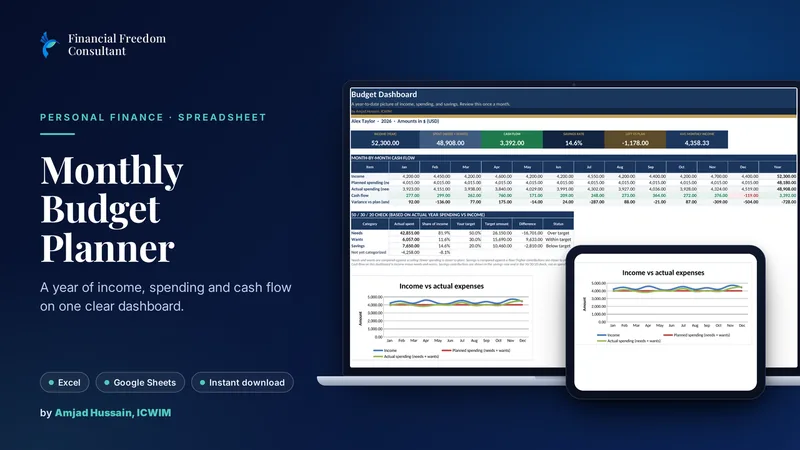 Monthly Budget Planner$8.99, instant downloadView →
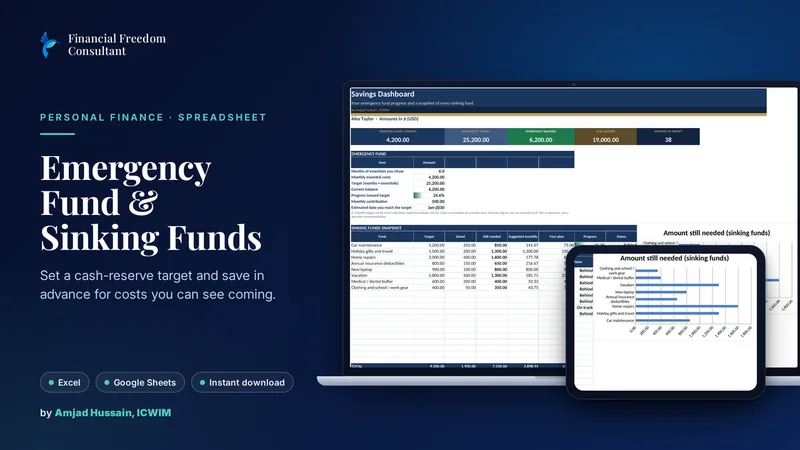 Emergency Fund Planner$6.99, instant downloadView →
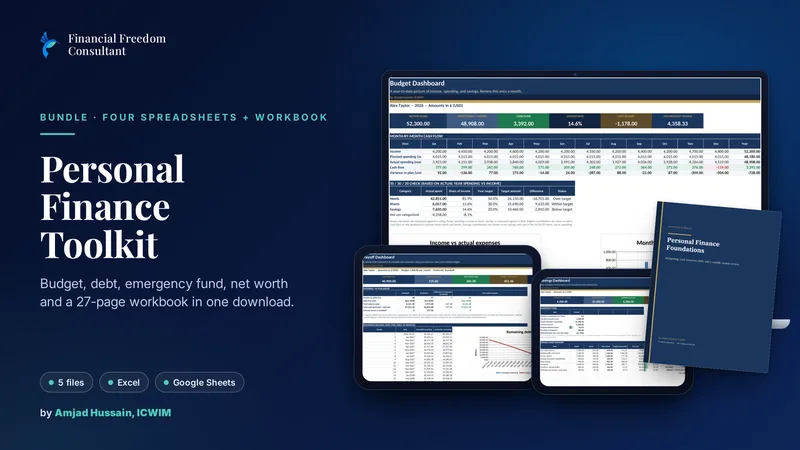 Personal Finance Toolkit Bundle$22.99, instant downloadView →
Frequently asked questions
How can a woman start investing in the UAE?
Know your numbers, build a safety net, clear expensive debt, decide your goals and timeline, then invest a small fixed amount regularly in diversified low-cost investments through a licensed provider.
How much money do I need to start investing?
You can start with a small monthly amount. The more important step is having an emergency fund first, so you never have to sell investments at a bad time.
Should I invest before I clear debt?
Expensive debt, such as credit cards, usually costs more than you can reliably earn by investing, so paying it down first is often sensible. Low-interest debt is a more personal decision.
Is it a good idea to have investments in my own name?
Many people find it helpful to have at least one account in their own name, so they have visibility and can act independently. Joint accounts and legal ownership rules vary, so ask the provider or a professional.
What is the safest way to start investing?
No investment is risk-free. Lower-risk starting points include keeping an emergency fund in cash and investing regularly in a diversified low-cost fund, only with money you will not need soon.
Do I need a financial adviser?
Not necessarily to begin. Learning the basics helps you ask better questions of any adviser. If you use one, check they are licensed and ask how they are paid.
Is there a one-to-one money programme for women?
Yes. The Women's Financial Freedom programme is taught one to one online, in English, Urdu or Hindi, covering money organisation, a safety net, the main markets and a long-term plan. It is education only.
Sources
- UAE Capital Market Authority
- UAE Government portal: end of service benefits
- UAE Central Bank: consumer protection
Want a person to check your numbers?
A free 15-minute intro call to see where you stand and what to do next. Education only, no tips, no pressure.
Short form first, so the call is useful for you.
Education only. Not investment, tax, legal or religious advice, and not a recommendation to buy, sell or hold any product. Rules and fees change; always check official sources. By Amjad Hussain, ICWIM (CISI Level 3 International Certificate in Wealth & Investment Management), accredited by the UAE Capital Market Authority, with 10+ years in financial markets. Dubai, UAE.